


Column
March 15, 2026
FabCafe Global Editorial Team
-
As hybrid learning expands access to education, a persistent challenge remains: while programming itself may be available to all, tailoring content and review sessions across time zones is not.
In 2015, BioClub Tokyo, a community lab situated within FabCafe, created the Asia & Oceania study group to support students taking How to Grow (Almost) Anything, a biology based spinoff of How to Make (Almost) Anything (HTGAA) and FabAcademy. With the core of the programming being held in synchronous with Eastern time zones (UTC-5), BioClub stepped in to serve willing participants who wanted to participate in East Asian time zones and in 2025, this offering was formalized into the HTGAA node system.
Although this course was originally created MIT/Harvard undergraduates, its structured as a high-level introduction to Synthetic Biology, and has been restructured to invite global students to join the course for free. This level of accessibility led to How to Grow (Almost) Anything offering an open source curriculum that is unmatched in the field of synthetic biology.
-
Although Georg Tremmel has been leading BioClub for the last decade, he has mentioned his inspiration in offering this course has been through his own journey with HTGAA.
“Synthetic Biology is going to affect each and everyone of us – and everyone should be in a position to learn and inform themselves from the experts in the fields. HTGAA is doing exactly that: providing free access to cutting-edge SynBio tools, methods and ideas. And that’s also the vision of BioClub: being a space and community where these ideas can happen.”
Georg Tremmel, Community Director and Founder of BioClub
About BioClub
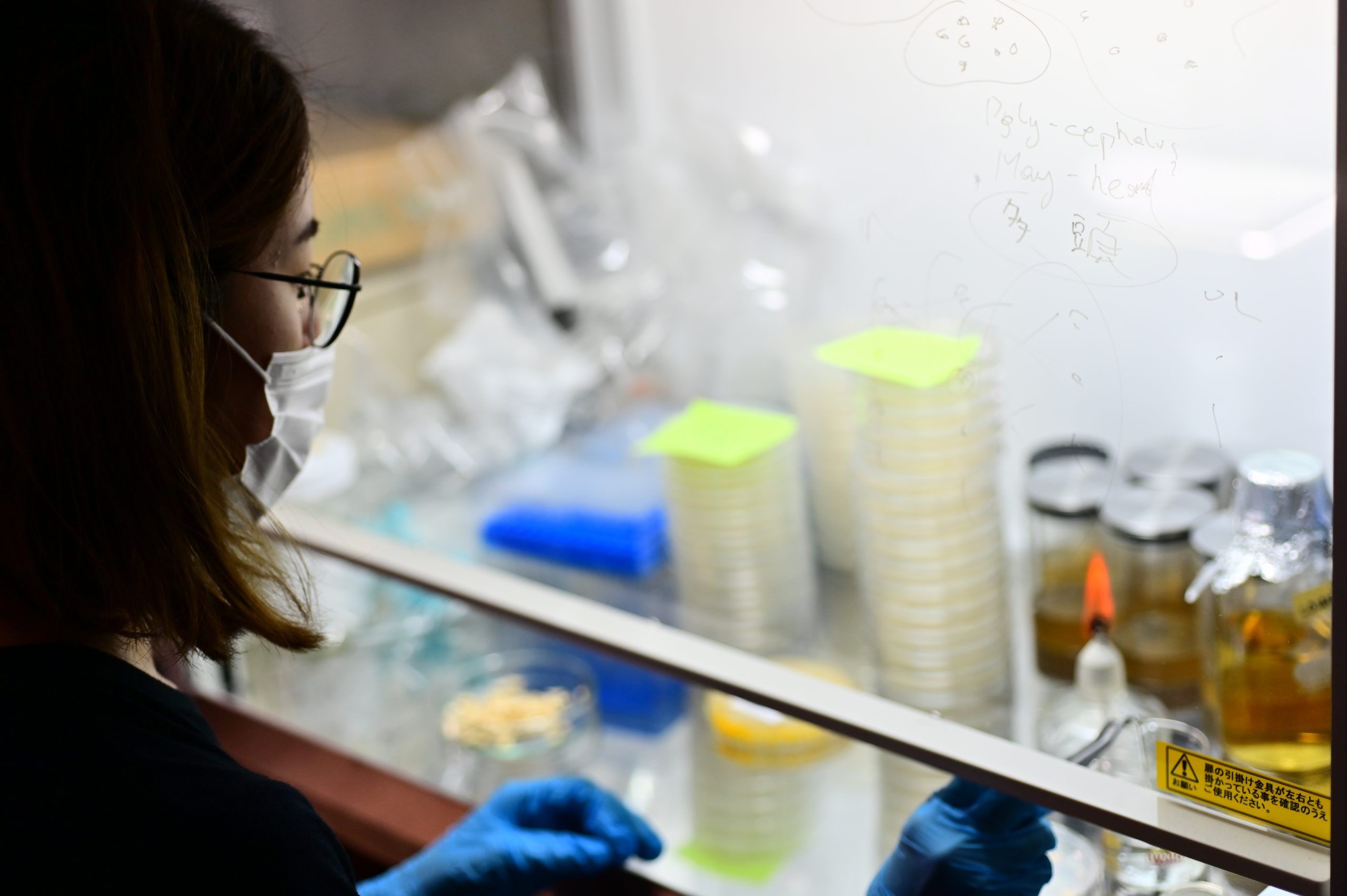
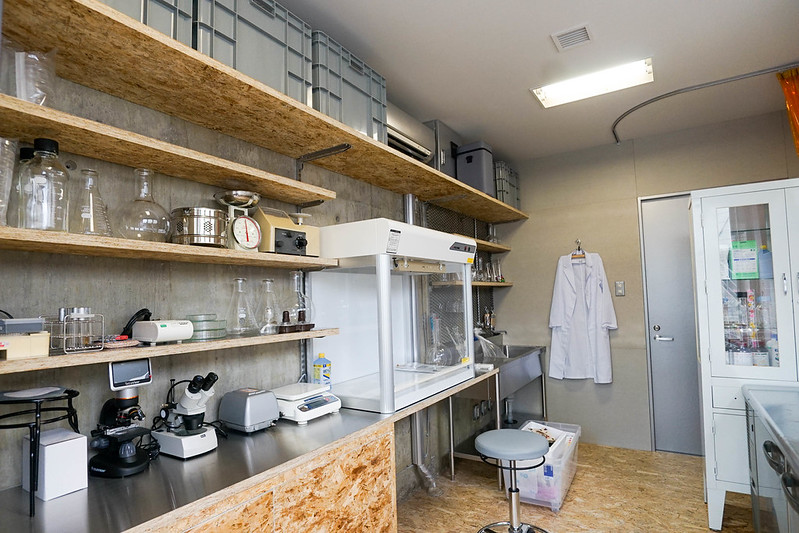
BioClub is a community biology lab for bioart, biodesign, DIY bio, open science, and citizen science in the heart of Shibuya. Founded in 2015 by Georg Tremmel, BioClub goal is to bring people together from diverse fields, collaborate across disciplines and experiment using biology as a creative catalyst. Everyone is welcome to join workshops, meetings, and activities regardless of skill level and experience. BioClub’s open house is every Tuesday at 7pm on the 2nd floor of FabCafe Tokyo.
-
The coursework is structured around practice based learning. Immediately, students are introduced to the concept of editing DNA, eventually gaining experience with liquid handling automation through an Opentrons lab before diving into a two-part sequence on protein design. The course then covers genetic circuits across two weeks, first addressing assembly technologies like Gibson Assembly, then exploring neuromorphic circuits. Following spring break, the curriculum shifts to cell-free systems, advanced imaging and measurement techniques including mass spectrometry, and bioproduction with cloud labs. Later weeks tackle genome building, biodesign and engineered living materials, frugal science, and bio fabrication, with teaching assistants dedicated to assisting with the students final projects.
-
“That’s where David Kong from the MIT Media Lab’s Community Bio Initiative came in. He was himself a student at MIT and saw the How to Make (Almost) Anything course and saw an opportunity to open up HTGAA (How to Grow [Almost] Anything) to a global audience.”
Georg Tremmel, Community Director and Founder of BioClub
-

Week 1
Principles & Practices -
Week 2
DNA Read, Write, & Edit -
Week 3
Opentrons Art -
Week 4
Protein Design Part I -
Week 5
Protein Design Part II -
Week 6
Genetic Circuits Part I: Assembly Technologies
“The course is not easy, but everyone who puts effort and time into it will succeed. It’s great to see people from different backgrounds joining the course and coming up with often exciting and sometimes strange ideas.”
Georg Tremmel, Community Director and Founder of BioClub
And what about those who are entering this course without any prior experience in biology? Beginners are provided with an opportunity to cover the fundamentals through a bio-bootcamp with many non-biologists completing assignments and their final project.
Amongst the students in the 2022 cohort is Elaine Regina, whose background is mainly based in design and fabrication and currently works at Fab Lab Bali. Her final project ‘Garden of Words’ explores plant communication through a living biosignal installation by translating mychorizal-biochemical dialogue into a 2–3 metre monument featuring 3D-printed fluidic chambers representing chemical flows through hyphal networks. Soil-embedded sensors track nutrient and ABA concentrations beneath a designated tree, transmitting data wirelessly to a bioreactor housing engineered E. coli. These bacteria express plant receptors linked to chromoproteins, shifting color in real time as chemical levels fluctuate. Automated valves regulate flow based on sensor input, creating a living visualization of underground resource exchange and stress signaling.
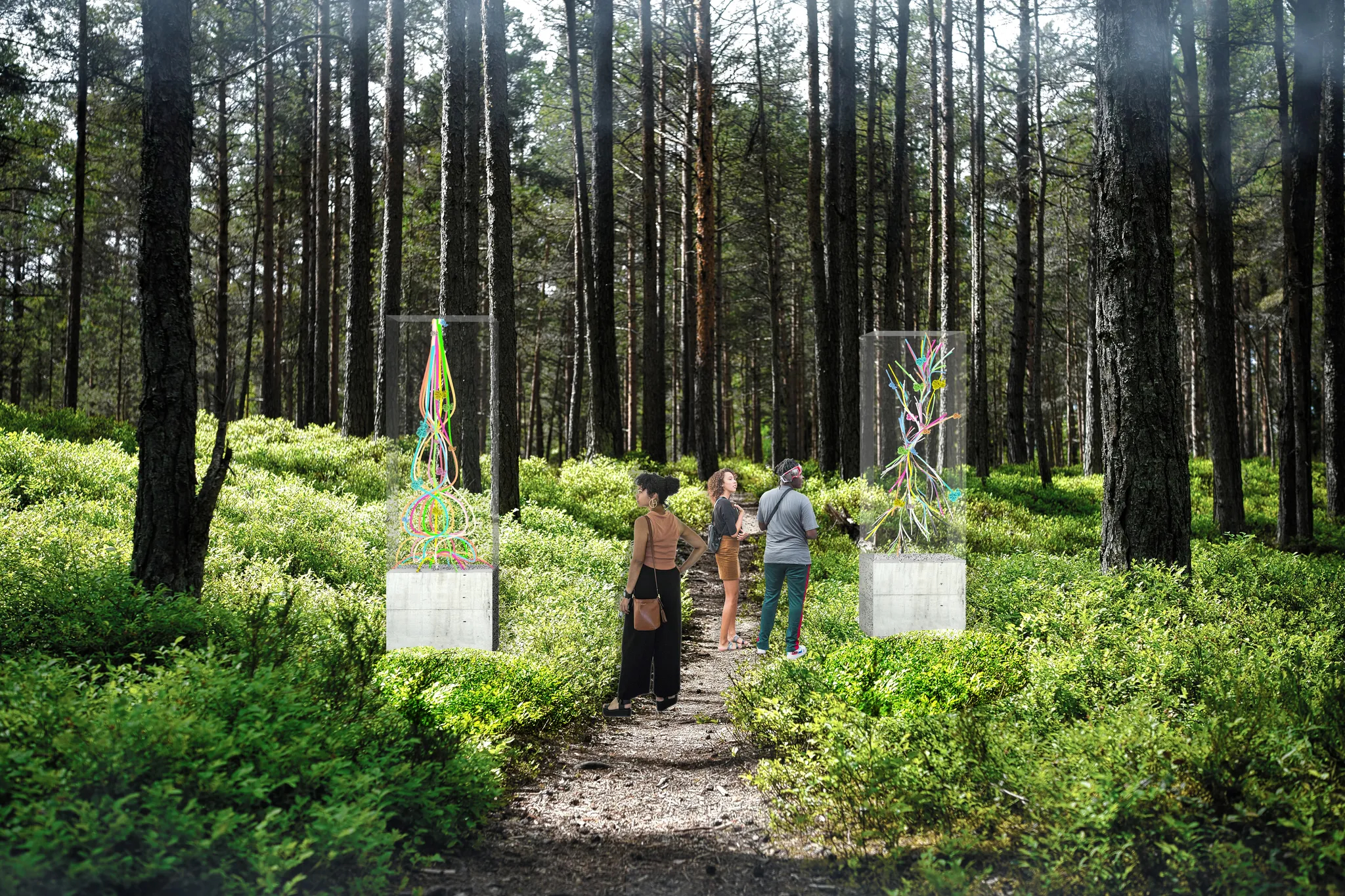
Image Source: Garden of Words by Elaine Regina
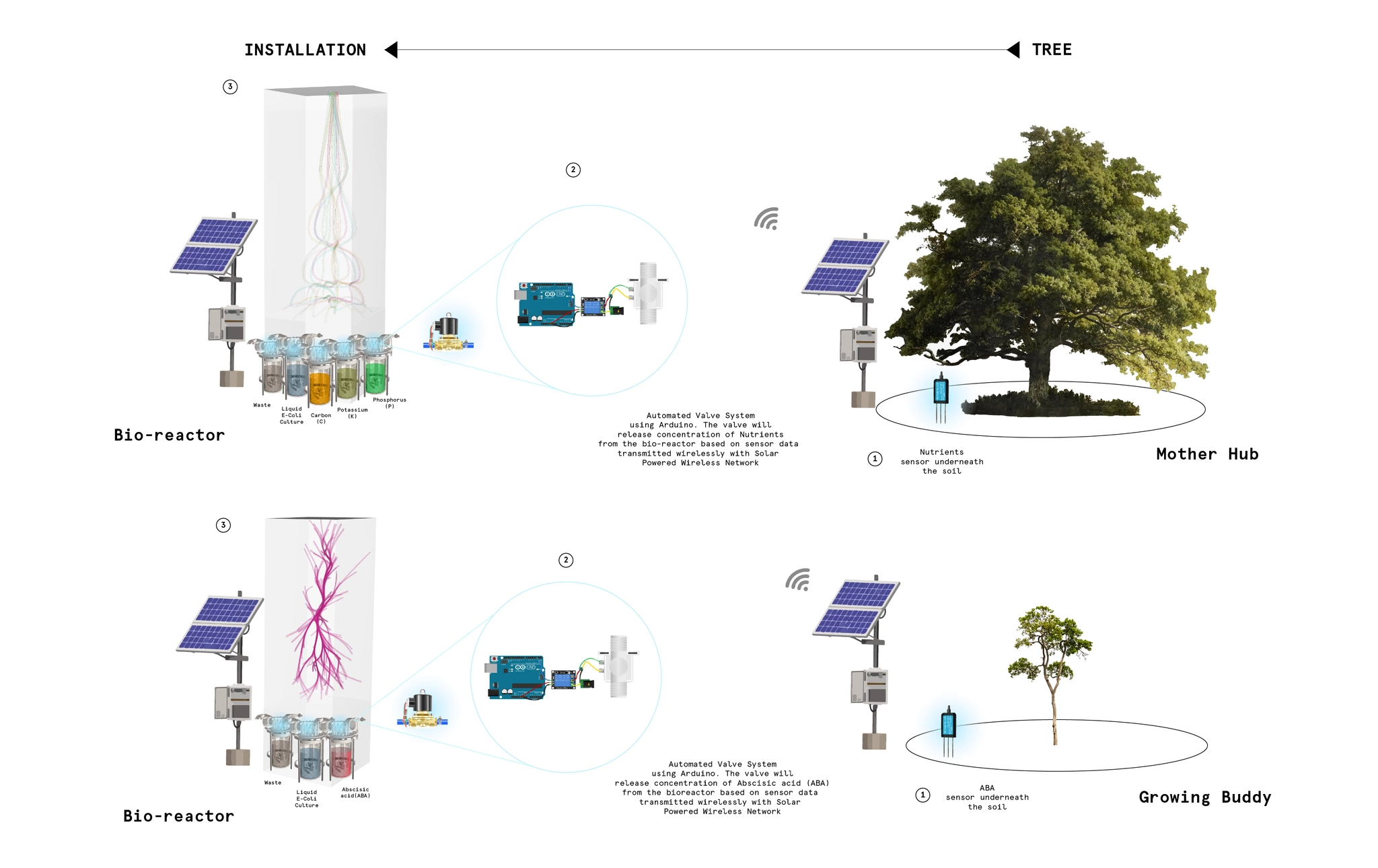
System diagram for ‘Garden of Words’.
Image Source: Garden of Words by Elaine Regina
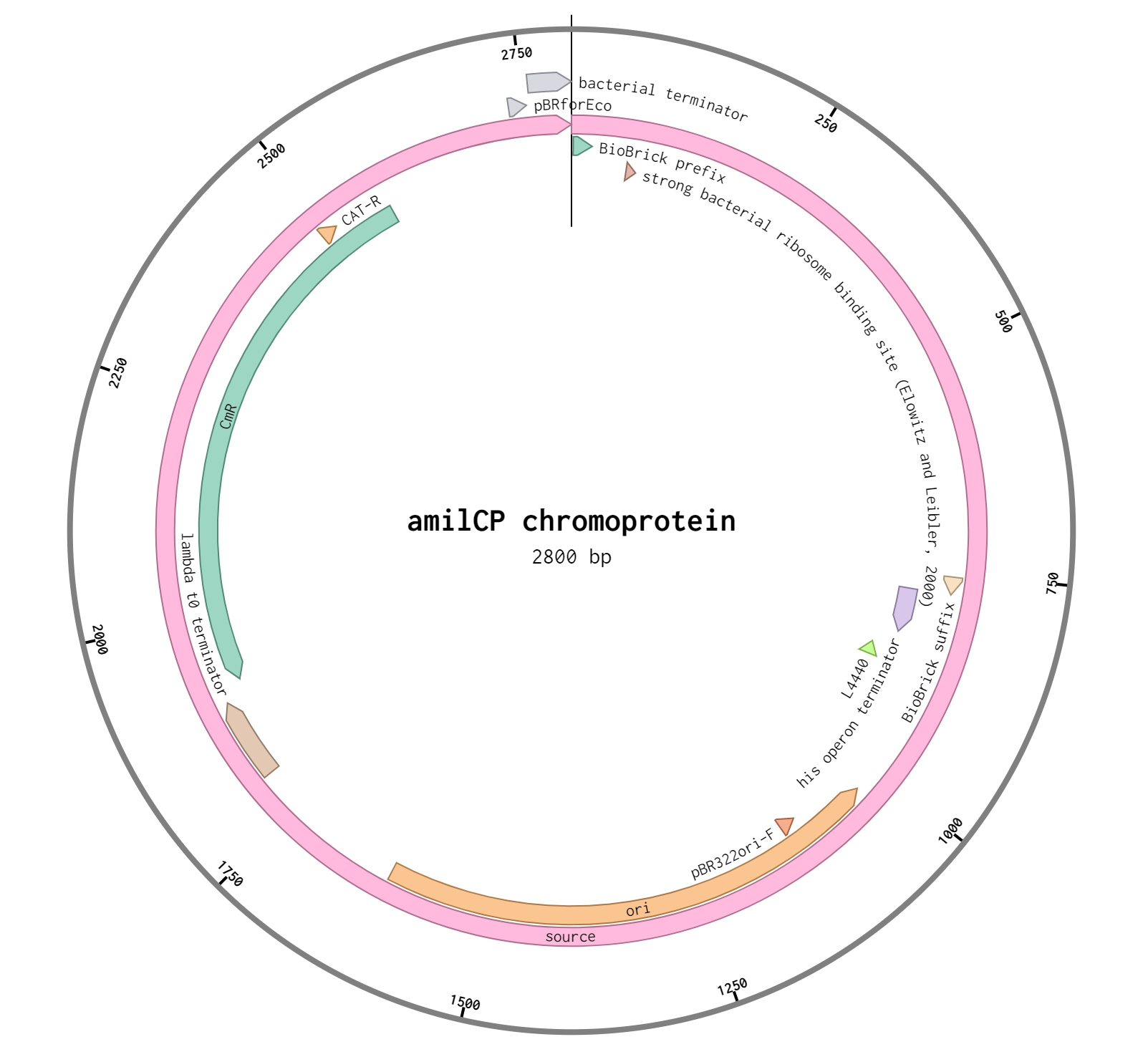
Plasmid map for chromoprotein expression design by Elaine to express Abscisic acid receptor PYR1/PYL2, inspired by this paper. Image Source: Garden of Words by Elaine Regina
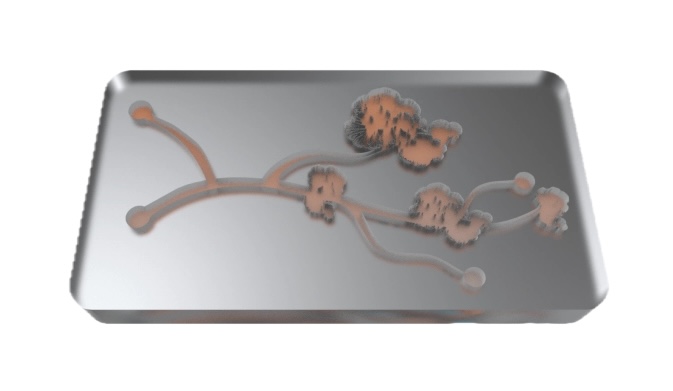
Example of Elaine’s microfluidic explorations.
Image Source: Garden of Words by Elaine Regina
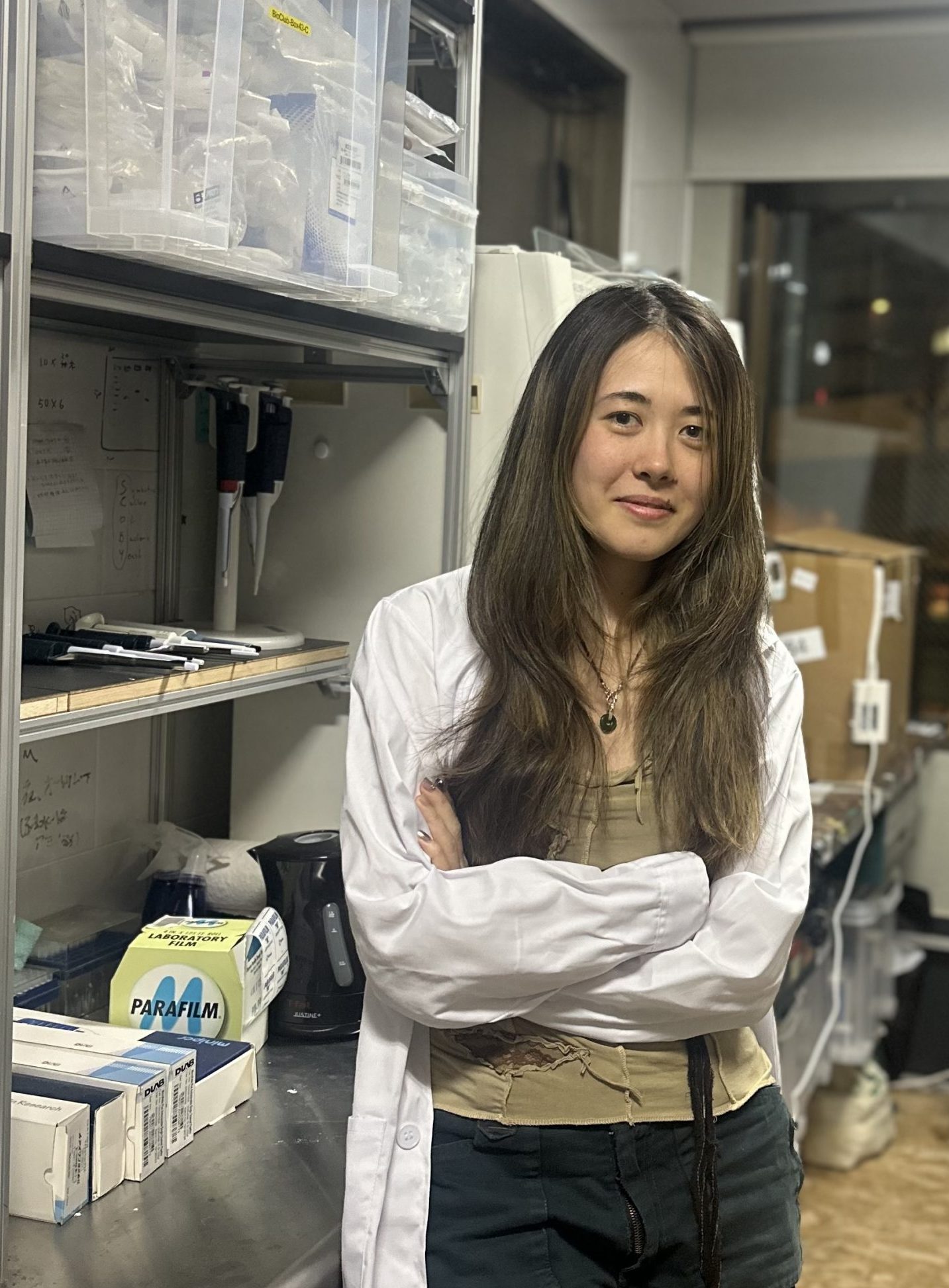
With an arduous curriculum, it takes a dedicated team to ensure that students feel supported in completing their studies. This is where BioClub comes in. BioClub Tokyo started with a simple vision: what if we would create a bio lab that is not only for scientists, but also open to artists, designers, and makers? What kind of works and projects would people create – once they have access and knowledge of this new emerging bio-media? At BioClub Tokyo, Ananda Gabo shares her experience in how the competition provided her with the confidence to succeed in bio-design competitions.
-
-
“Participating in How to Grow [Almost] Anything in 2021 has helped me to contextualize all of the wet lab experience I had gained from community workshops and provided me with a foundation where I was given enough confidence to collaborate with scientists to develop bio-based solutions in competitions. In 2021 I helped to lead a project submitted to the Google x Biodesign Sprint, a competition developed by the Biodesign Challenge, and through my experience in HTGAA we won second place!”
Ananda Gabo, Lab Manager of BioClub
Former How to Grow (Almost) Anything (2021) Global Cohort
-
Ananda is currently the lab manager at BioClub Tokyo, and has served as a global teaching assistant for HTGAA in 2022 and is assisting BioClub Tokyo’s node for HTGAA this year. In 2022, she was a co-author for How to grow (almost) anything: a hybrid distance learning model for global laboratory-based synthetic biology education published in Nature Biotechnology.
Although the deadline for enrollment has already passed, HTGAA at BioClub is scheduled to be offered every year. Stay tuned to see what exciting projects the BioClub Tokyo node features in the coming weeks – and in the meantime check out BioClub’s talks and lab workshops.
-
-
BioClub
BioClub is a community biology lab supporting projects in bioart, biodesign, DIY bio, open science hardware, citizen science, and research. For over a decade, we have brought together people from diverse fields to collaborate, experiment, and create new perspectives using biology and nature as a source of creative ideas. Based around our open wet lab, we host weekly meetups, workshops, lectures, and collaborative projects. Artists, scientists, industry professionals, hobbyists, and complete beginners are all welcome. The goal is to experience biotechnology firsthand and discuss what it means from every angle.
BioClub is a community biology lab supporting projects in bioart, biodesign, DIY bio, open science hardware, citizen science, and research. For over a decade, we have brought together people from diverse fields to collaborate, experiment, and create new perspectives using biology and nature as a source of creative ideas. Based around our open wet lab, we host weekly meetups, workshops, lectures, and collaborative projects. Artists, scientists, industry professionals, hobbyists, and complete beginners are all welcome. The goal is to experience biotechnology firsthand and discuss what it means from every angle.


-
FabCafe Global Editorial Team
This articles is edited by FabCafe Global.
Please feel free to share your thoughts and opinions on this article with us.
→ Contact usThis articles is edited by FabCafe Global.
Please feel free to share your thoughts and opinions on this article with us.
→ Contact us -


See Branch List
See Keyword List
- #Craft
- #crQlr
- #HK Event Report
- #COUNTER_POINT
- #Prototyping
- #Design thinking workshop
- #SDG 14 Life under water
- #Miro
- #Creator Collaboration
- #Bangkok Design Week 2020
- #FabCafe Bangkok
- #Fab Meetup Hong Kong
- #FAB Ideation
- #Future City
- #COVID-19
- #Event Report
- #Sustainable
- #Business
- #Social Welfare
- #Fab Meetup
- #Exhibition
- #Art
- #SDGs
- #Haptic Design
- #Material
- #Drawing
- #Wood
- #Hackathon
- #AI
- #Agriculture
- #YouFab
- #Workshop
- #Meetup
- #AWRD
- #Bio
- #Global Goals Jam
- #XR (VR/AR/MR)
- #Talk Event
- #Ideathon
- #Embroidery
- #Material Meetup
- #Innovation
- #Architecture
- #Interview
- #Education
- #3D
- #Business Projects
- #Community