


Event report
May 11, 2026
FabCafe Global Editorial Team
Every craft community knows the question. How do you honor what you’ve inherited and still make something that works today?
It’s not a new problem, and there’s no single answer. But it’s the question at the heart of ISAN Value UP, a program that FabCafe Bangkok is helping lead alongside Thailand’s Creative Economy Agency (CEA) and TCDC centers in Surin, Sisaket, and Ubon Ratchathani.
On March 13, designers and craftspeople from across Thailand joined an open talk featuring three FabCafe operators from Japan, sharing firsthand perspectives on working with local craftspeople, artists, and creative communities in their own regions. This talk was to kickoff a brand new initiative in Isan, Thailand where over five months, the program will bring together designers and craftspeople from across Thailand’s Isan region, connecting local craft knowledge with design thinking to help communities develop products that carry their identity into new markets.
To open the conversation, FabCafe Bangkok invited three FabCafe operators from Japan, from Kyoto, the mountain forests of Hida, and the foot of Mount Fuji, to share how they’ve each approached the same challenge in their own communities. Not as a blueprint, but as a set of parallel experiences from places that have been working on this for years.
-
FabCafe Kyoto
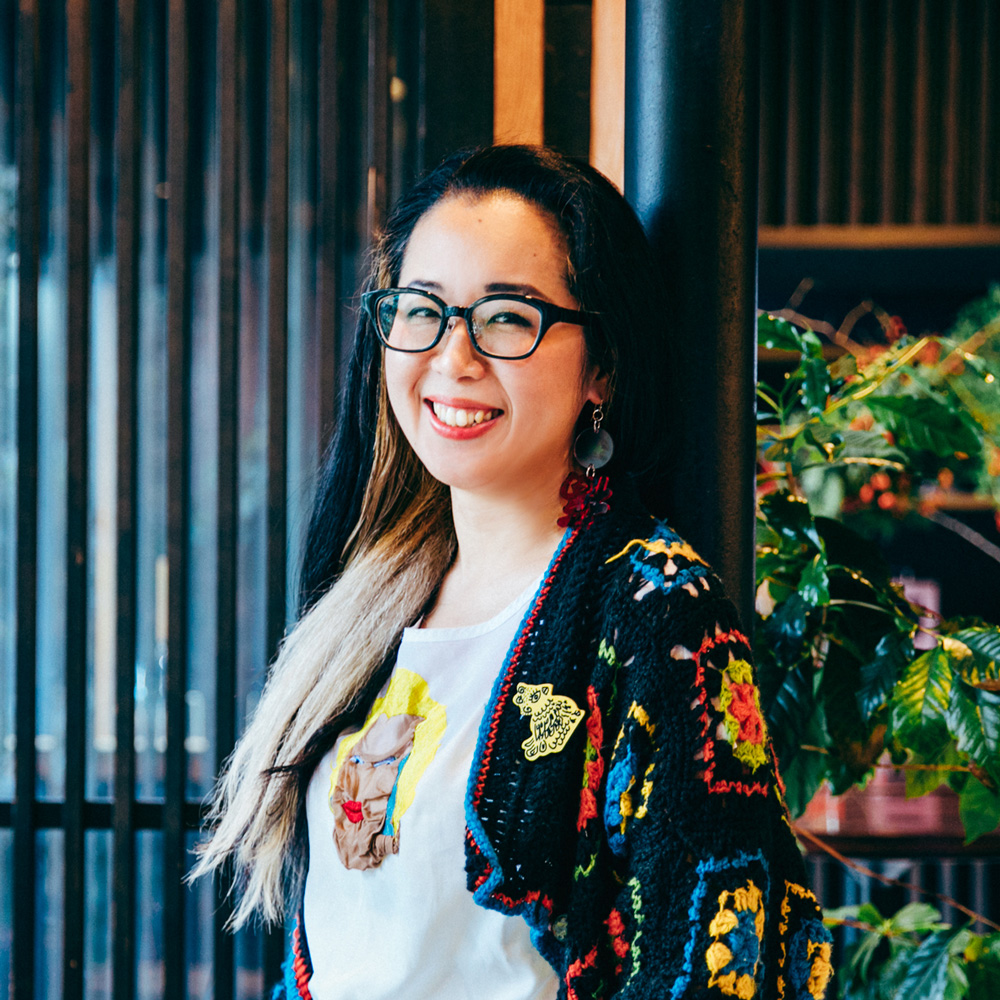
Nami Urano spoke on behalf of FabCafe Kyoto and Loftwork, bringing years of experience studying how Kyoto has sustained a creative economy built on over a thousand years of craft tradition.
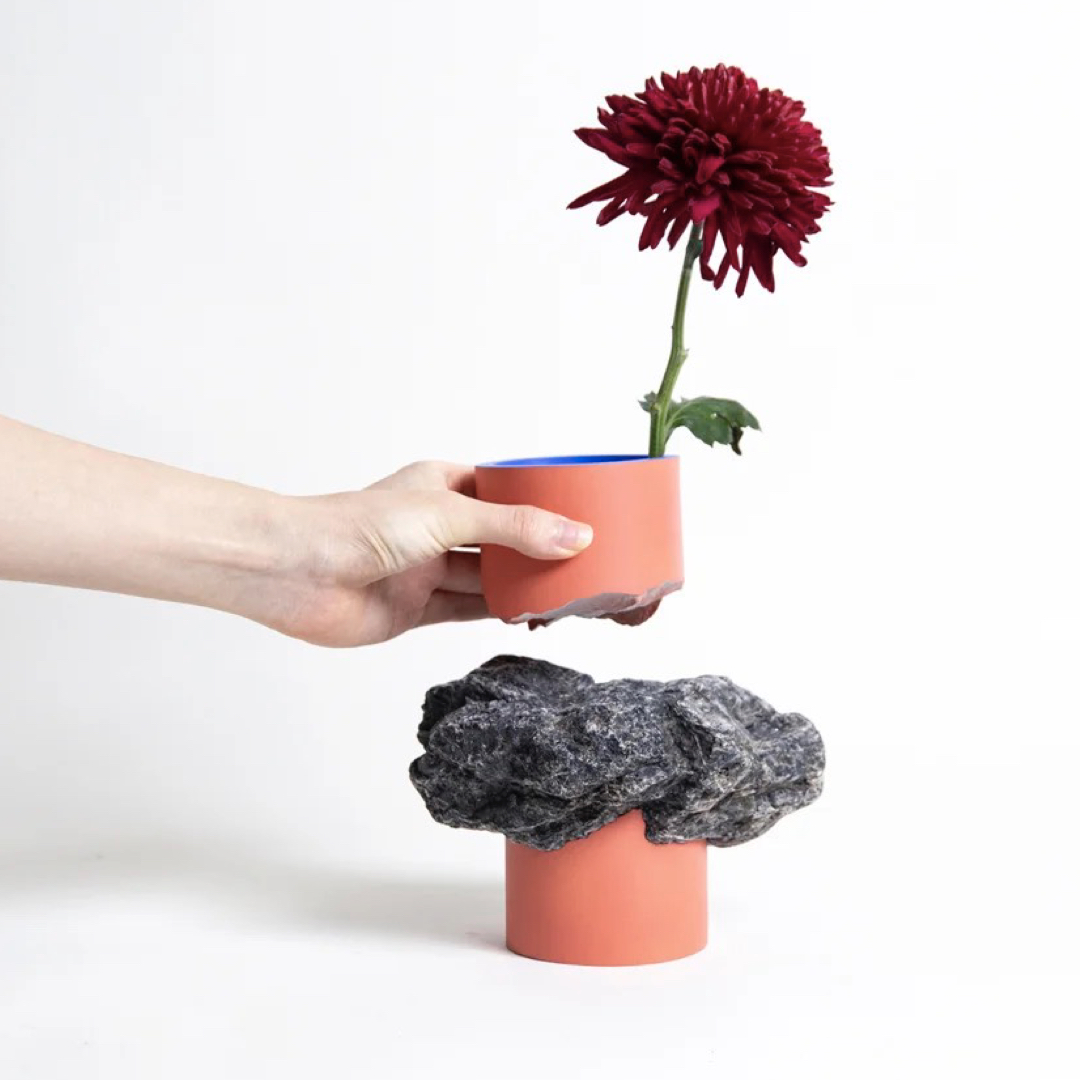
Photo credit: nosemono -
FabCafe Hida

Kotaro Iwaoka, CEO of Hidakuma and FabCafe Hida, shared how his team has worked to unlock the potential of Hida’s vast, largely untapped broadleaf forests in the mountains of Gifu Prefecture.
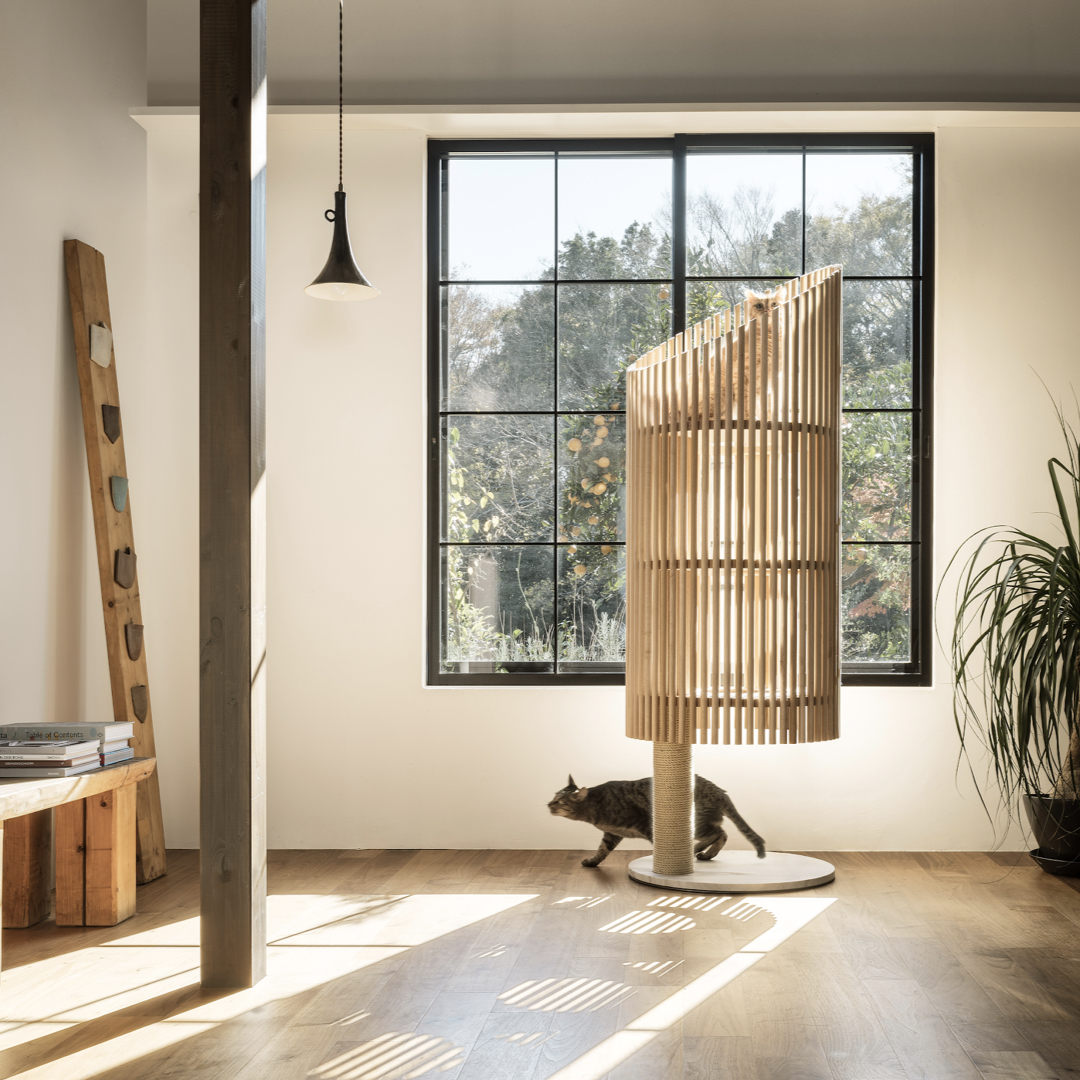
Photo credit: RINN -
FabCafe Fuji
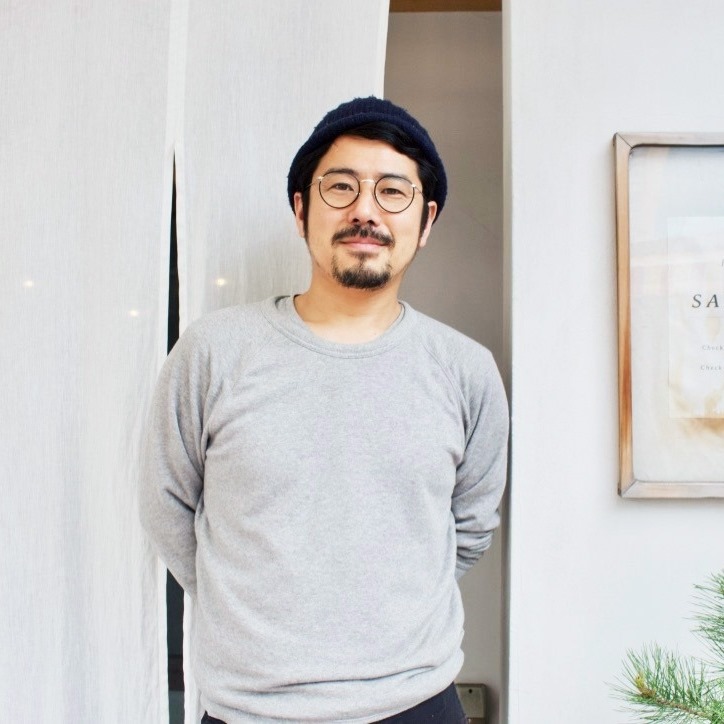
Tsuyoshi Yagi, who runs DOSO and FabCafe Fuji in Fujiyoshida, brought the perspective of a small textile city at the foot of Mount Fuji that has been quietly asking the same question for years: how does a place like this stay alive?
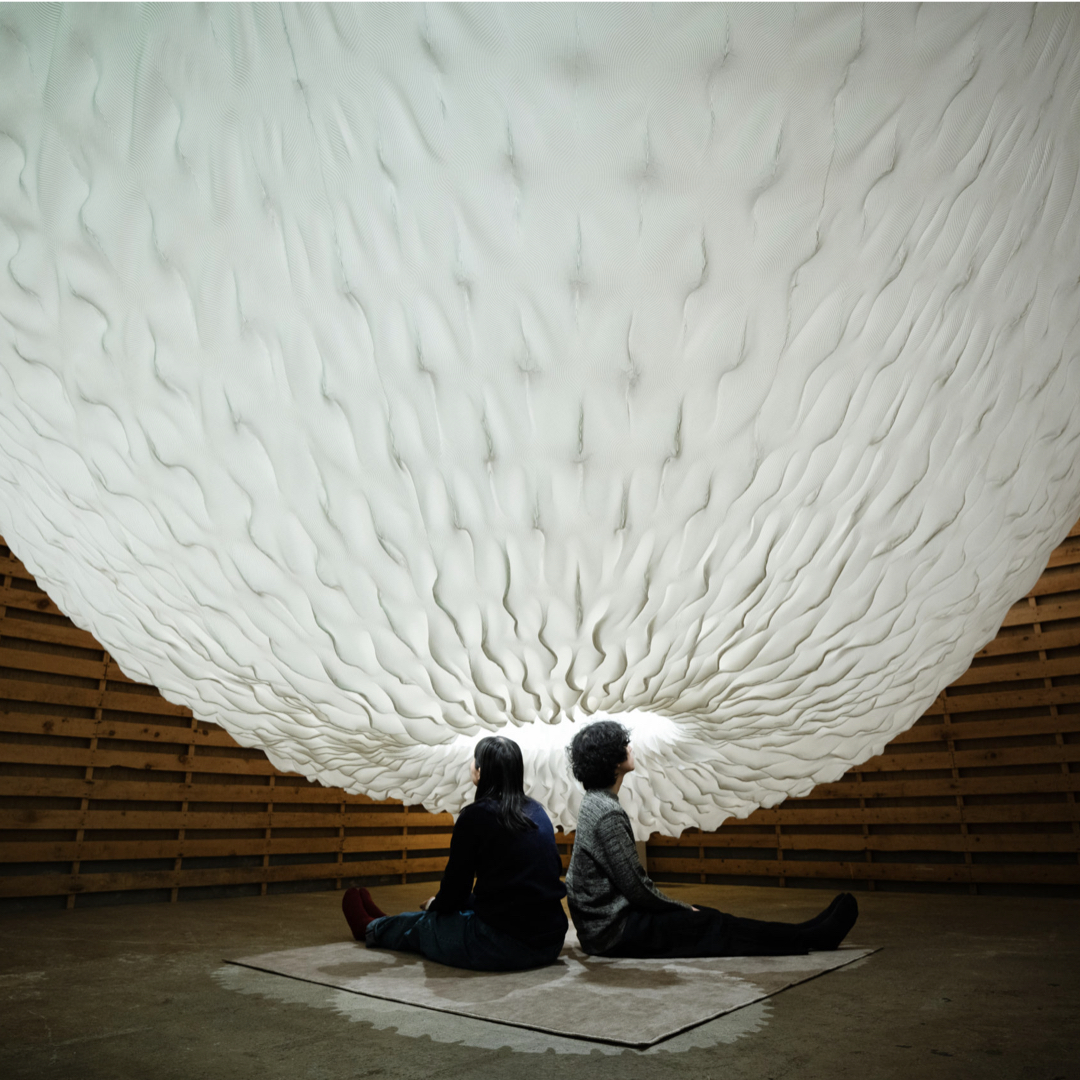
Artist: 上條 陽斗 / Haruto KAMIJO
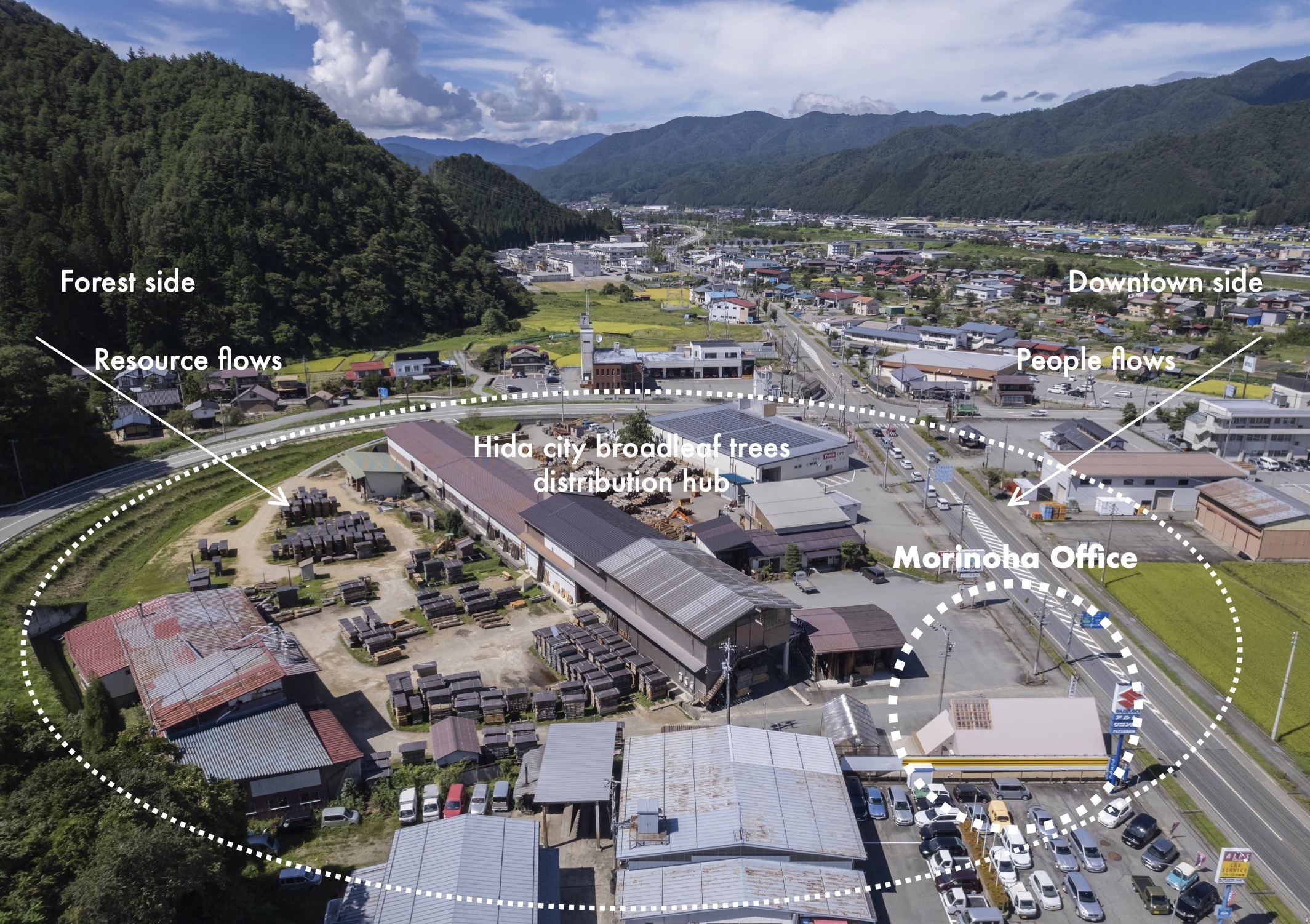
Credit: Kotaro Iwaoka/ FabCafe Hida/ Hidakuma
Kotaro begins every Hidakuma project by bringing stakeholders into the forest before any design decisions are made. Not to assess timber. To understand what is actually there: the species, the age of the trees, the way the terrain shapes the material. His guiding principle is: “The forest is not wood.” The forest is something to understand first, not a resource to extract from.
Nami shared a project from FabCafe Kyoto that makes the same point differently. The Nosemono project 3D-scans irregular natural stones and prints forms that fit their surfaces precisely, letting the stone’s own character determine what it becomes rather than reshaping it to meet a design.
Yagi-san applied the same thinking. DOSO’s work always begins with buildings that have outlived their original purpose. The question is never what should we build here, but what does this community need, and what does this space already have.
For designers and craftspeople in Isan, the traditions, materials, and knowledge already present in the region are the starting point. The work begins with understanding them clearly before deciding what to make.
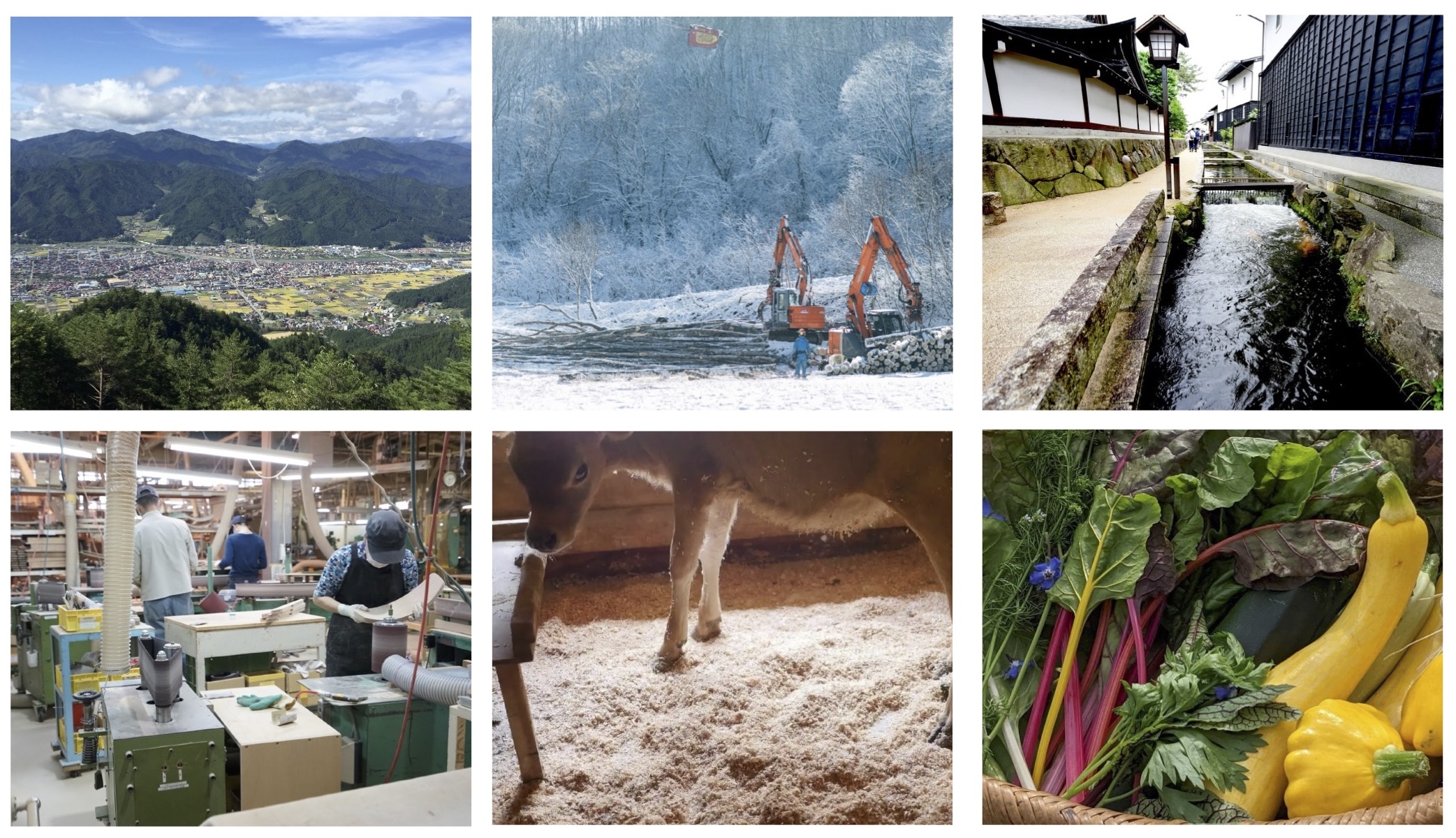
Credit: Kotaro Iwaoka/ FabCafe Hida/ Hidakuma
Ten years ago, the forestry cooperative, the sawmill, and the furniture manufacturers in Hida each worked by themselves. They were part of the same supply chain but had no real relationship with one another. Hidakuma’s first move was to get those businesses into the same room.
Only after that did Hidakuma begin bringing in architects and companies from outside the region. By then, the local chain was strong enough to absorb outside energy without being destabilized by it.
Outside collaborators brought in before the local chain is connected tend to create projects that sit on top of a community rather than growing from within it. The relationships that hold a creative economy together are usually the local ones, built first, before anyone is watching.
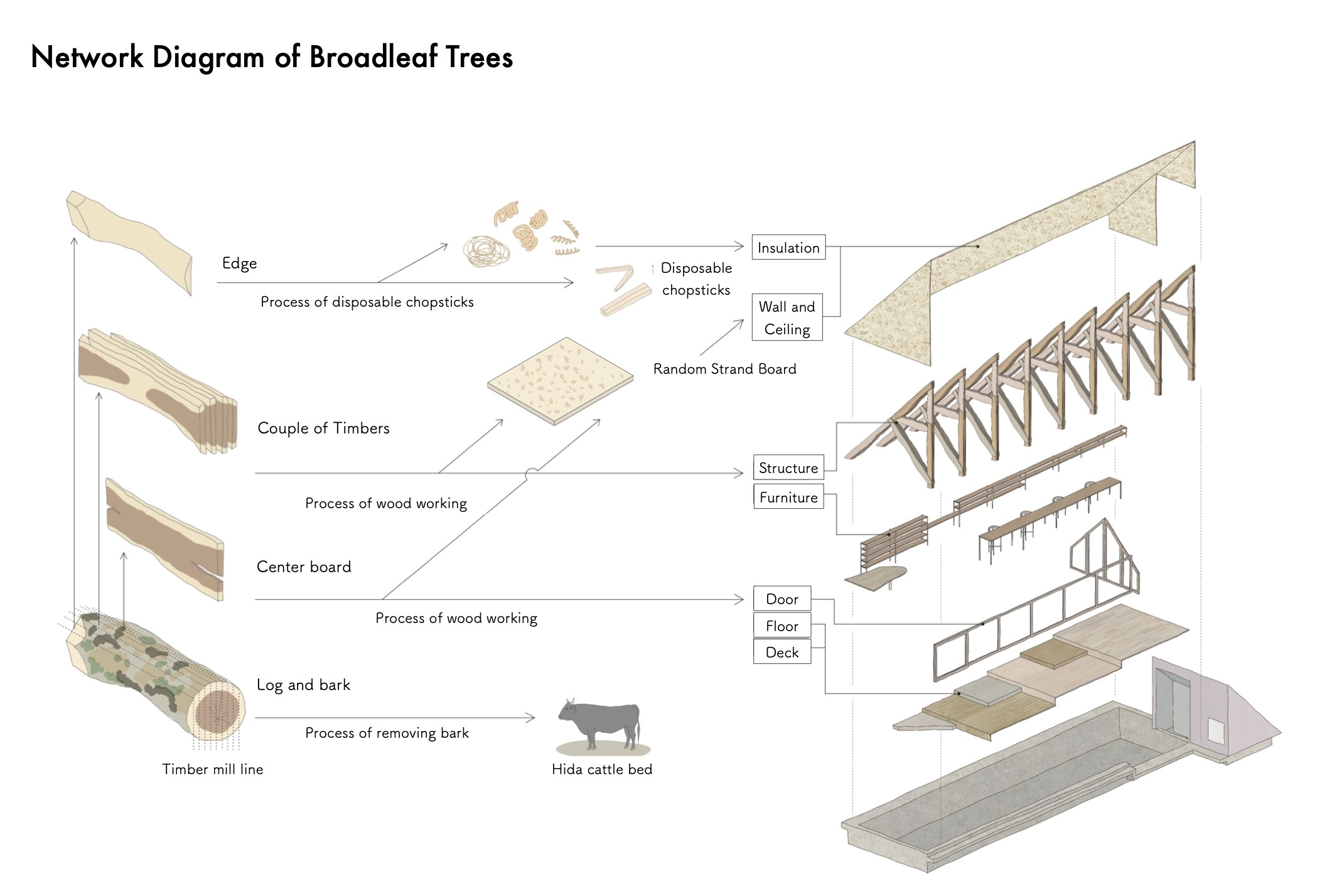
Credit: Kotaro Iwaoka/ FabCafe Hida/ Hidakuma
Kotaro described the current industrial process in Hida as a distillation. One hundred percent forest goes in. By the time you reach finished products, about one percent remains. Everything shed along the way, woodchips, mill ends, sawdust, leaves, branches, is treated as byproduct.
Hidakuma’s work has been to ask what each of those streams could become. Wood too irregular for conventional processing gets 3D-scanned and turned into data that designers and craftspeople can work from directly. Sawdust becomes insulation packed into walls. Hidakuma’s newest building, the Morinoha Office, was constructed entirely from local broadleaf trees in proportions that match the actual species composition of Hida’s forests that year. Nothing was set aside.
Nami made a related point from FabCafe Kyoto’s experience. When knowledge systems that have historically been closed start to open, the things that were previously invisible or undervalued start to find new purpose. The byproduct becomes the material.
For craft communities in Isan, the question is straightforward: what parts of your existing process or material are currently treated as waste, and what might they become if you designed for them?
Slide Credit: Tsuyoshi Yagi/ FabCafe Fuji/ DOSO
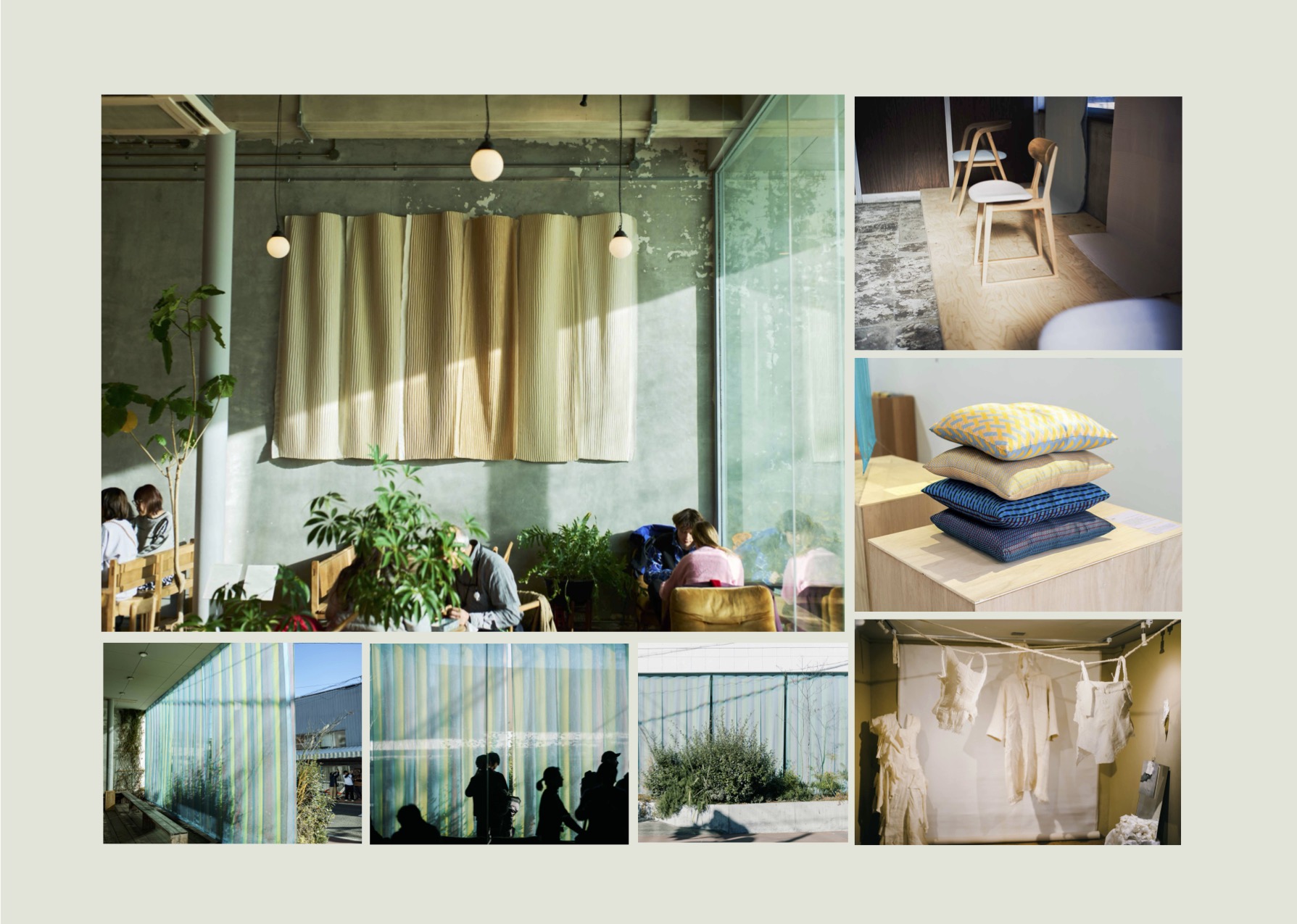
Yagi-san’s mission at DOSO is captured in four words: “Cultivating Soil for Culture.” You cannot force culture to appear. You can only create the conditions for it to grow.
In Fujiyoshida, that meant building six interconnected ventures over time: a cafe, a hostel, an artist residency, a print studio, a textile collaboration project, and Japan’s only textile arts festival. Each one is designed to deepen the relationship between visitors and the town. A cafe visit is an hour and a first encounter. A hostel stay is a day, long enough to feel the rhythms of the place. A residency is a month, which is when real exchange becomes possible.
Nami made a similar point from FabCafe Kyoto’s experience. The role of a catalyzer is not to control what happens but to make interesting things more likely: opening closed systems, connecting people who wouldn’t otherwise meet, lowering the threshold for exchange. The outcomes aren’t predictable, but the conditions can be designed.
Both spoke about this as a long game. The creative communities that last are built on real relationships and genuine local roots, not on the momentum of a single project or the interest of a single outside partner.
-
One of the questions submitted in advance asked what makes a regional product feel contemporary without losing what makes it local. It’s a question that sits underneath almost every challenge craft communities face when trying to reach new markets.
In Thailand, as in many countries, “contemporary” has come to mean a visual vocabulary: clean lines, minimal palettes, the aesthetic language of international design. Nami pushed back on this. Contemporary is not a style you apply. It comes from genuine cultural rootedness, daily usability, and emotional meaning. It can’t be shortcut by changing how something looks.
Kotaro’s work in Hida is a concrete example. The products that have come out of Hidakuma’s process are contemporary not because they were designed to look a certain way, but because they emerged from a deep understanding of the material, the place, and the people who have worked with both for generations. The cat tower made from Hida broadleaf timber is quiet and considered, but what gives it weight is everything behind it: the forest, the chain, the craft.
For Isan designers, the reframe is simple. The goal is not to make traditional craft look contemporary. It is to understand the tradition so well that what you make from it is genuinely useful and meaningful today.
-
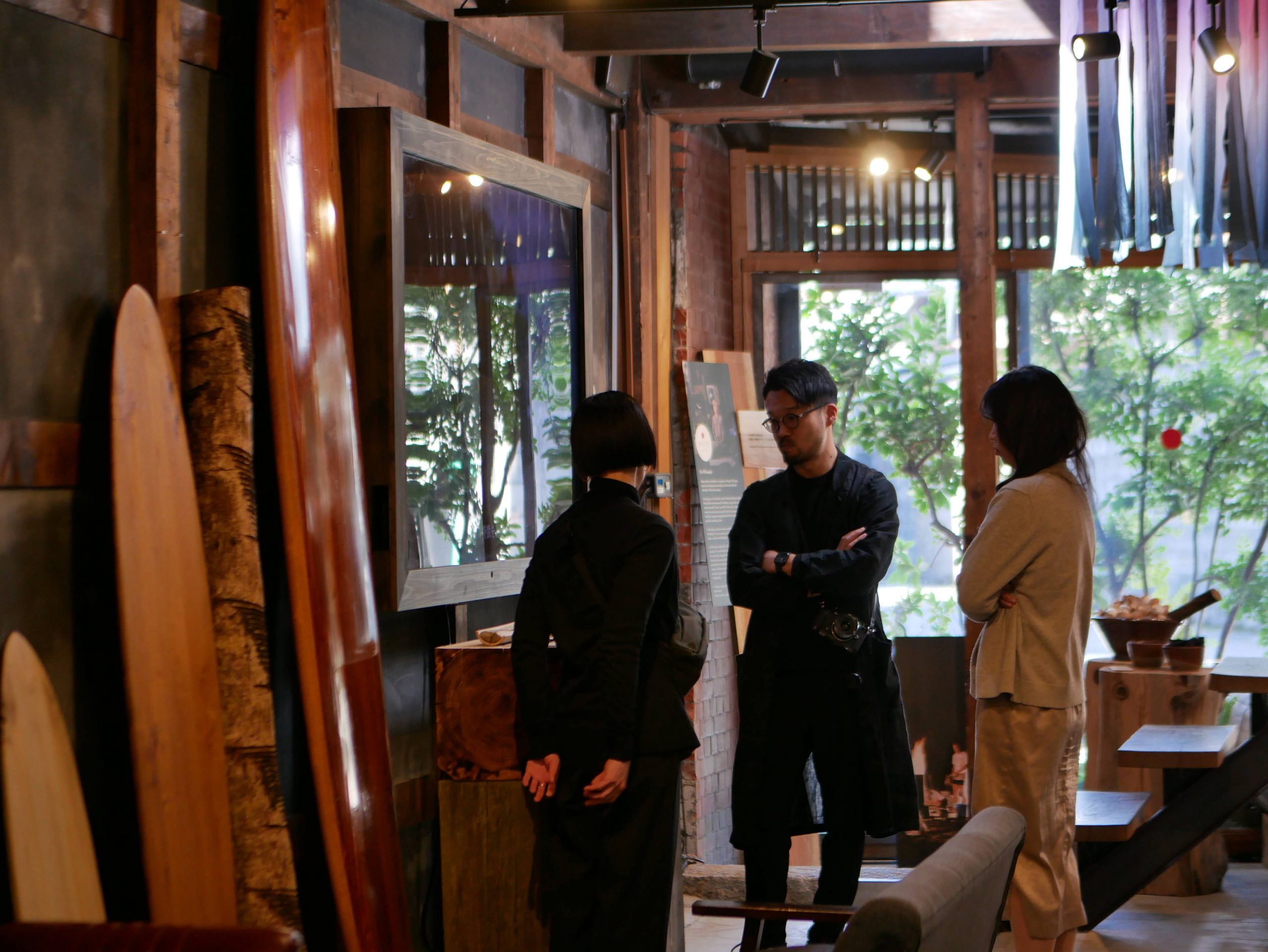 Photo Credit: Kosuke Kinoshita | FabCafe Kyoto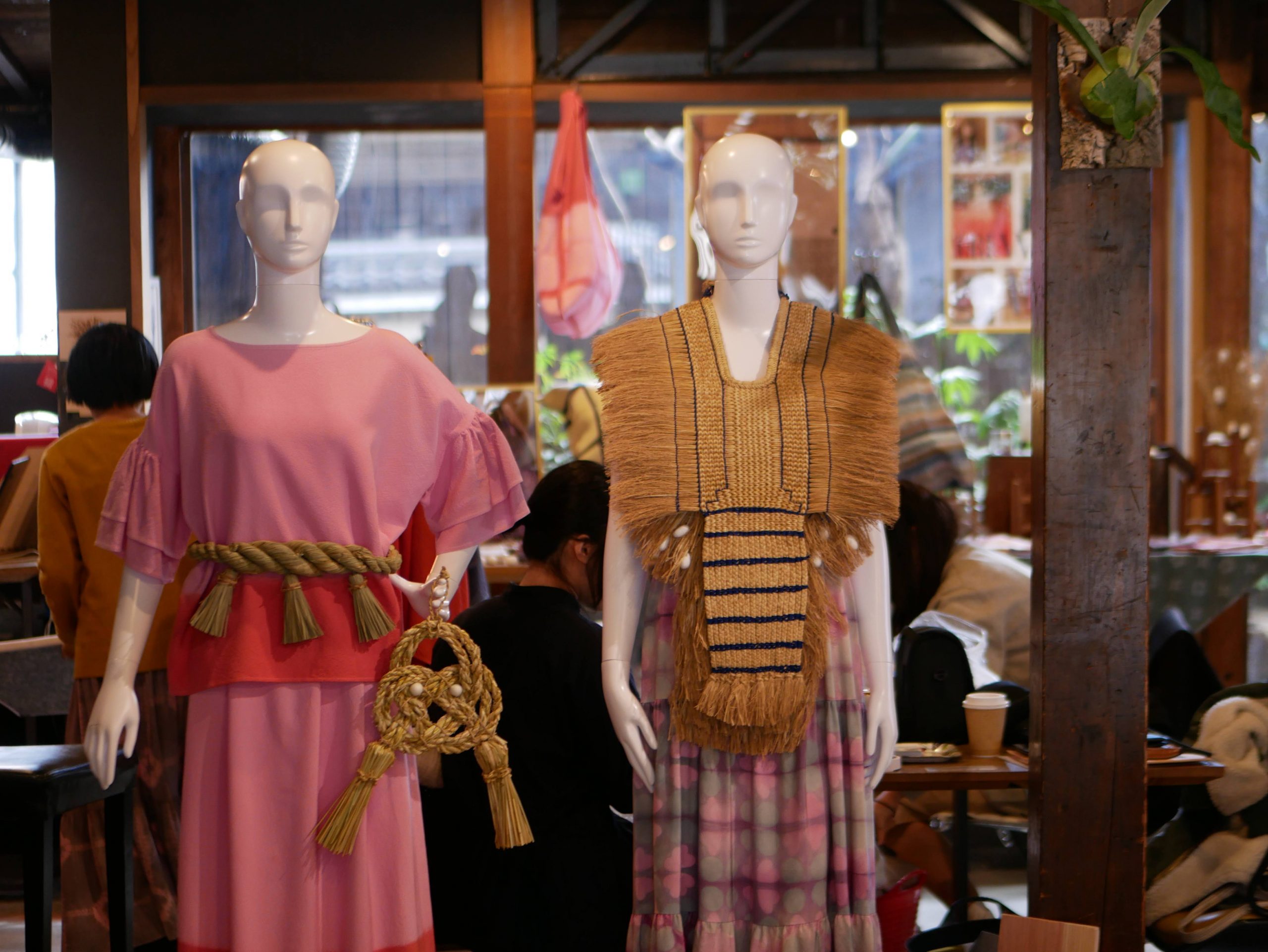
Photo Credit: Kosuke Kinoshita | FabCafe Kyoto
The ISAN Value UP Open Talk was the first event in a five-month program. Over the coming months, FabCafe Bangkok, CEA, and TCDC centers in Surin, Sisaket, and Ubon Ratchathani will be working with designers and craftspeople from across the Isan region to develop products and practices built on what the region already has.
What the three speakers shared from Japan isn’t a template. Their contexts are different, their materials are different, and their communities are different. But they’ve each shown that this kind of work is possible, that it takes time, and that it almost always starts with a conversation rather than a design decision.
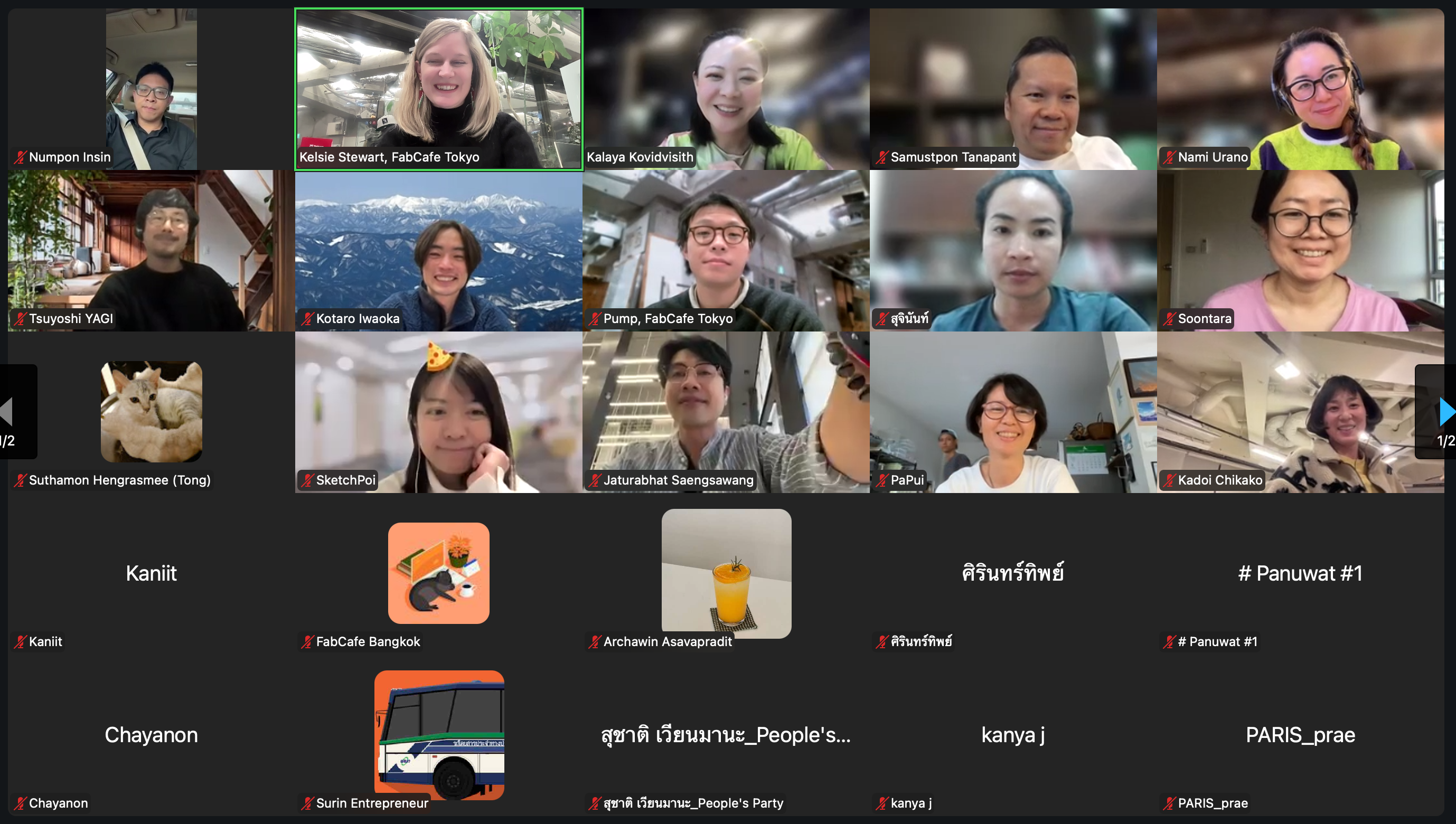
The ISAN Value UP Open Talk was held on March 13, 2026, organized by FabCafe Bangkok, CEA, TCDC Surin, TCDC Sisaket, and TCDC Ubon Ratchathani. Speakers: Nami Urano (FabCafe Kyoto / Loftwork), Kotaro Iwaoka (FabCafe Hida / Hidakuma), Tsuyoshi Yagi (FabCafe Fuji / DOSO).


-
FabCafe Global Editorial Team
This articles is edited by FabCafe Global.
Please feel free to share your thoughts and opinions on this article with us.
→ Contact usThis articles is edited by FabCafe Global.
Please feel free to share your thoughts and opinions on this article with us.
→ Contact us -


See Branch List
See Keyword List
- #Craft
- #crQlr
- #HK Event Report
- #COUNTER_POINT
- #Prototyping
- #Design thinking workshop
- #SDG 14 Life under water
- #Miro
- #Creator Collaboration
- #Bangkok Design Week 2020
- #FabCafe Bangkok
- #Fab Meetup Hong Kong
- #FAB Ideation
- #Future City
- #COVID-19
- #Event Report
- #Sustainable
- #Business
- #Social Welfare
- #Fab Meetup
- #Exhibition
- #Art
- #SDGs
- #Haptic Design
- #Material
- #Drawing
- #Wood
- #Hackathon
- #AI
- #Agriculture
- #YouFab
- #Workshop
- #Meetup
- #AWRD
- #Bio
- #Global Goals Jam
- #XR (VR/AR/MR)
- #Talk Event
- #Ideathon
- #Embroidery
- #Material Meetup
- #Innovation
- #Architecture
- #Interview
- #Education
- #3D
- #Business Projects
- #Community