


Event report
April 15, 2026
FabCafe Global Editorial Team
How do we archive scents to preserve our memories in a future where climate change influences the scents available to us in the future?
Climate change has deeply affected the fragrance industry. With unpredictable droughts, floods and extreme heat, ingredients such as sandalwood and vanilla, one cannot help but wonder what would happen if these materials would disappear. Not only would our lexicon of fragrance descriptors adjust to new standards of the future, but there would be obvious generational gaps in describing memories driven by scent.
On January 24, 2026, a scent distillation workshop was conducted in Shibuya at FabCafe Tokyo. The workshop, “Distill the Lost Scents of Terra,” was co-hosted by BioCraft and BioClub with the goal of offering more than just a simple scent chemistry session. It was an experiment in scent driven science fiction and cognitive science, all while democratizing the scientific processes behind fragrance extraction and design.
In this event, participants were able to design a fragrance that could exist in the year 2226: a future where environmental changes have stripped the Earth of its lush greenery and previously plentiful scent palettes.
Participants were tasked with extracting “Lost Scents of Terra” from modern materials to archive them for the future. The participants, or researchers from the future, were encouraged to brainstorm around the crossing boundaries of scent, memory, and plant science.

Participants observe the setup stage of the distillation process, adding the plant material to the flask before initiating heating and condensation.
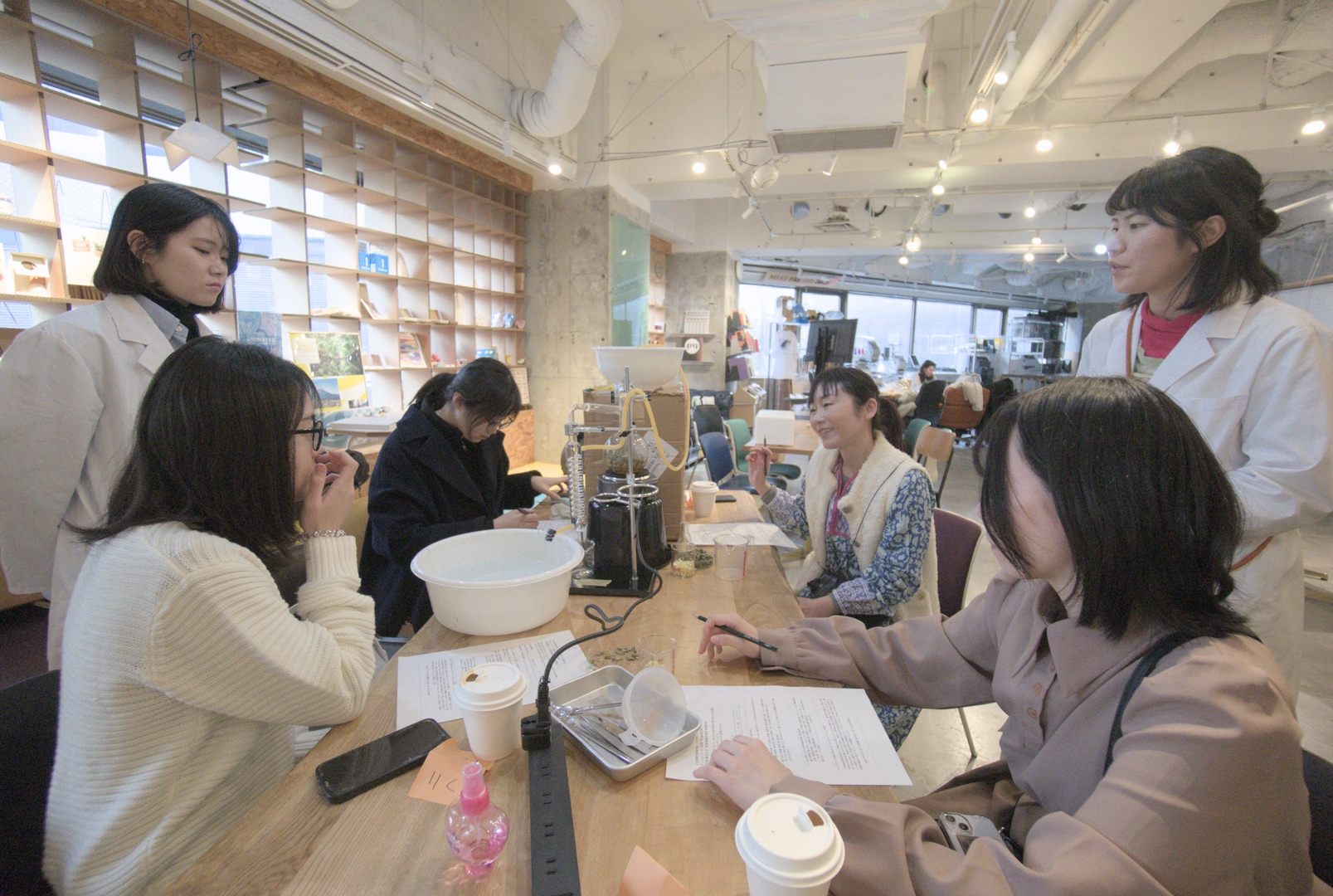
Group working together to document their scent narratives and assign names to their distillations.
Botanicals: Cinnamon, mandarin orange, yuzu peel, grapefruit, osmanthus, kuromoji (lindera umbellata), and moss.
Distillation Equipment: Flasks, beakers, condensers, heaters, and distillation stands.
| Time | Content |
|---|---|
| 14:00 | Briefing: The Science of Scent and Memory Immersion into the world-view and a mini-lecture on why smells trigger memories. |
| 14:10 | STEP 1: Material Selection Selecting materials to be archived in the “Museum of the Future.” |
| 14:25 | STEP 2: Distillation Experiment Observing the process of molecular separation and condensation. |
| 15:25 | STEP 3: Naming and Storytelling Granting “names” and “stories” to the scents to give them meaning. |
| 15:55 | STEP 4: Future Scent Auction Presenting the value of the scents as “Future Scent Merchants.” |
| 16:15 | Debriefing: Reflection and Sharing Reviewing the experience and closing. |
-
The workshop wore the costume of science fiction by design. Framing it as a speculative future wasn’t an aesthetic choice but a methodological one. By building a shared fiction, participants could step outside their everyday relationship with plants and scent, and encounter them instead through the twin lenses of emotion and ecological urgency.
Rather than delivering a lecture on climate change, we constructed a world where its consequences had already arrived. The “Lost Terra” setting used storytelling to do what data alone rarely can: trigger the imagination and make the stakes feel personal.
The premise: participants were researchers from the year 2226. In that world, most plant life has vanished. Natural fragrance is so scarce it trades for millions of credits: a luxury, a relic, a rumor. Sent back to 2026 Earth, their mission was to extract Drops of Memory and preserve them in a scent archive for a future that has forgotten what the living world smells like.
Moving between an imagined future and the tangible present, between speculation and hands-on science, gave participants a way to hold both at once. The fiction created the emotional distance needed to see something familiar as precious. The science brought them back to earth, literally.
-
 Presentation introducing the workshop concept and speculative future scenario to participants.
Workshop handout explaining the distillation process with illustrated diagrams showing the transformation from solid plant material to extracted scent.
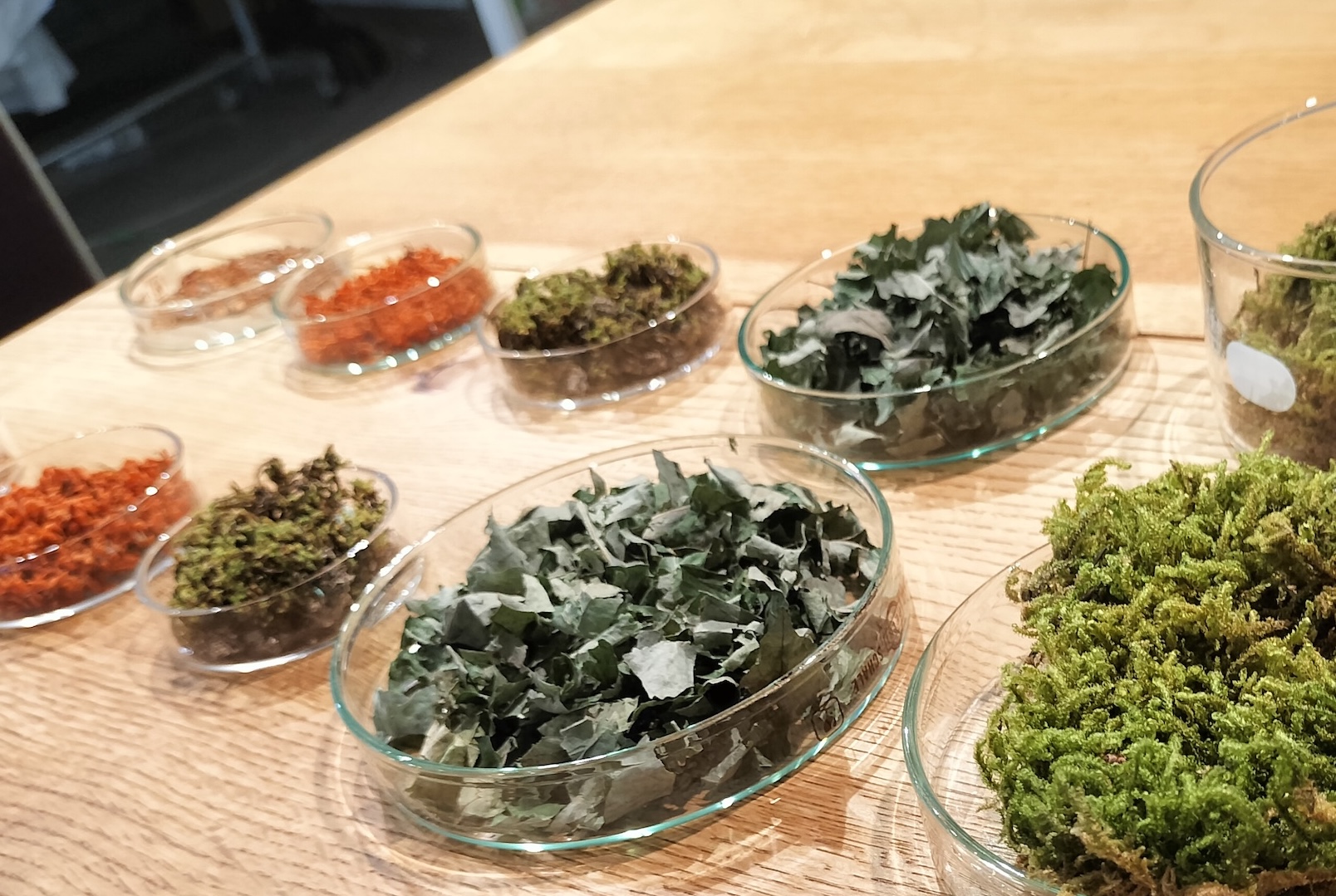
Botanical materials laid out for selection.
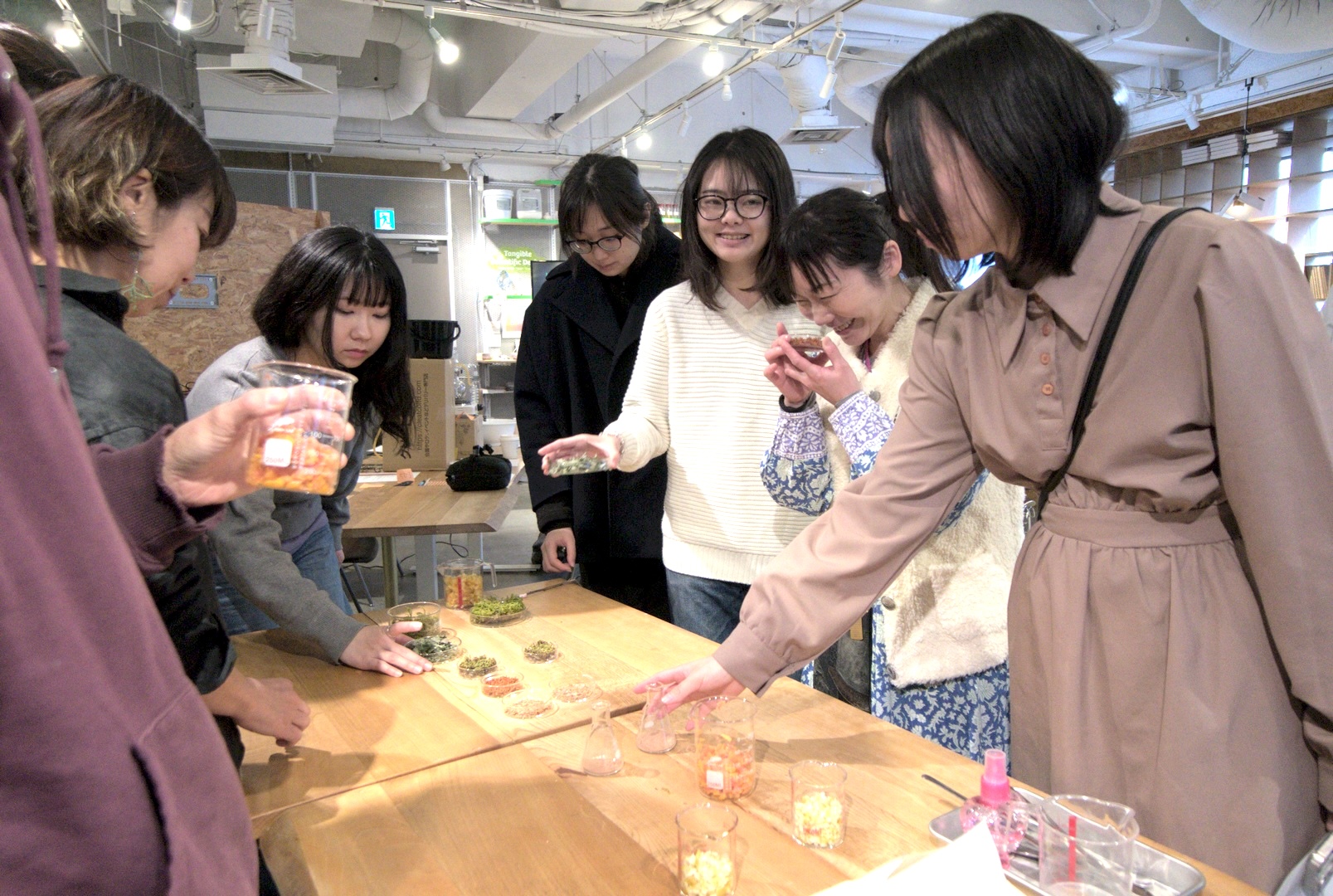
Participants discussing which materials to combine.
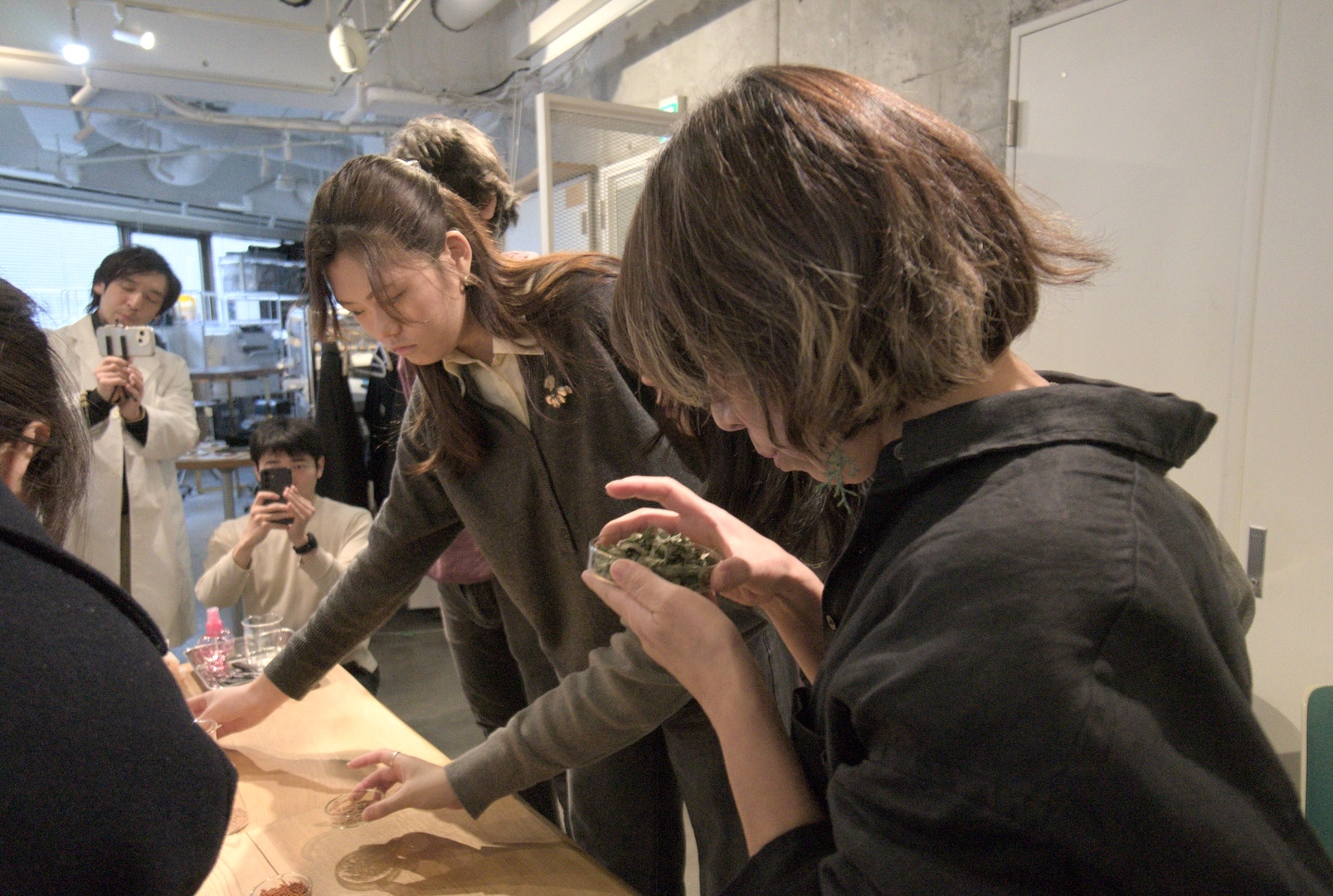
Examining and smelling botanical materials.
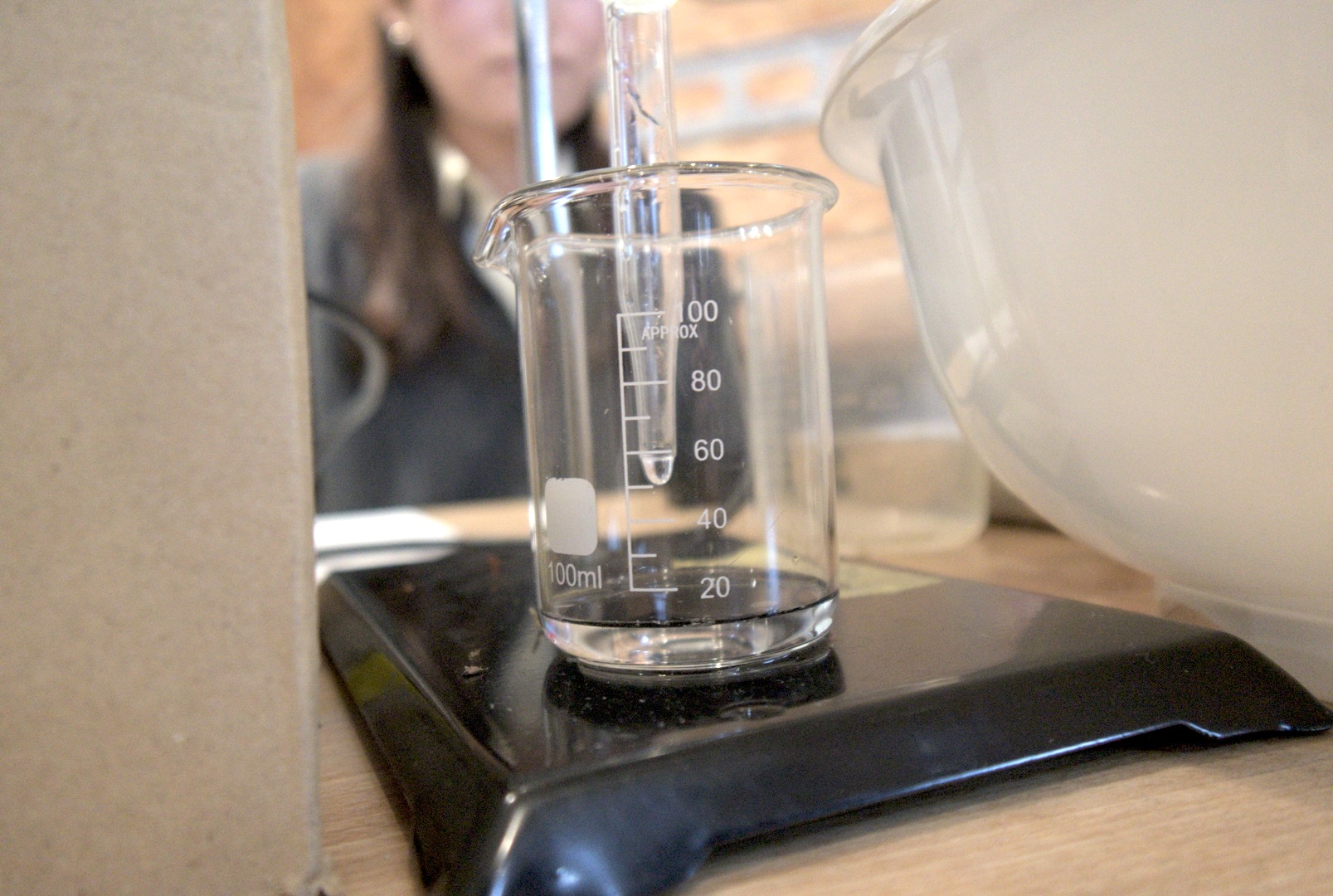
Collecting the extracted compounds.
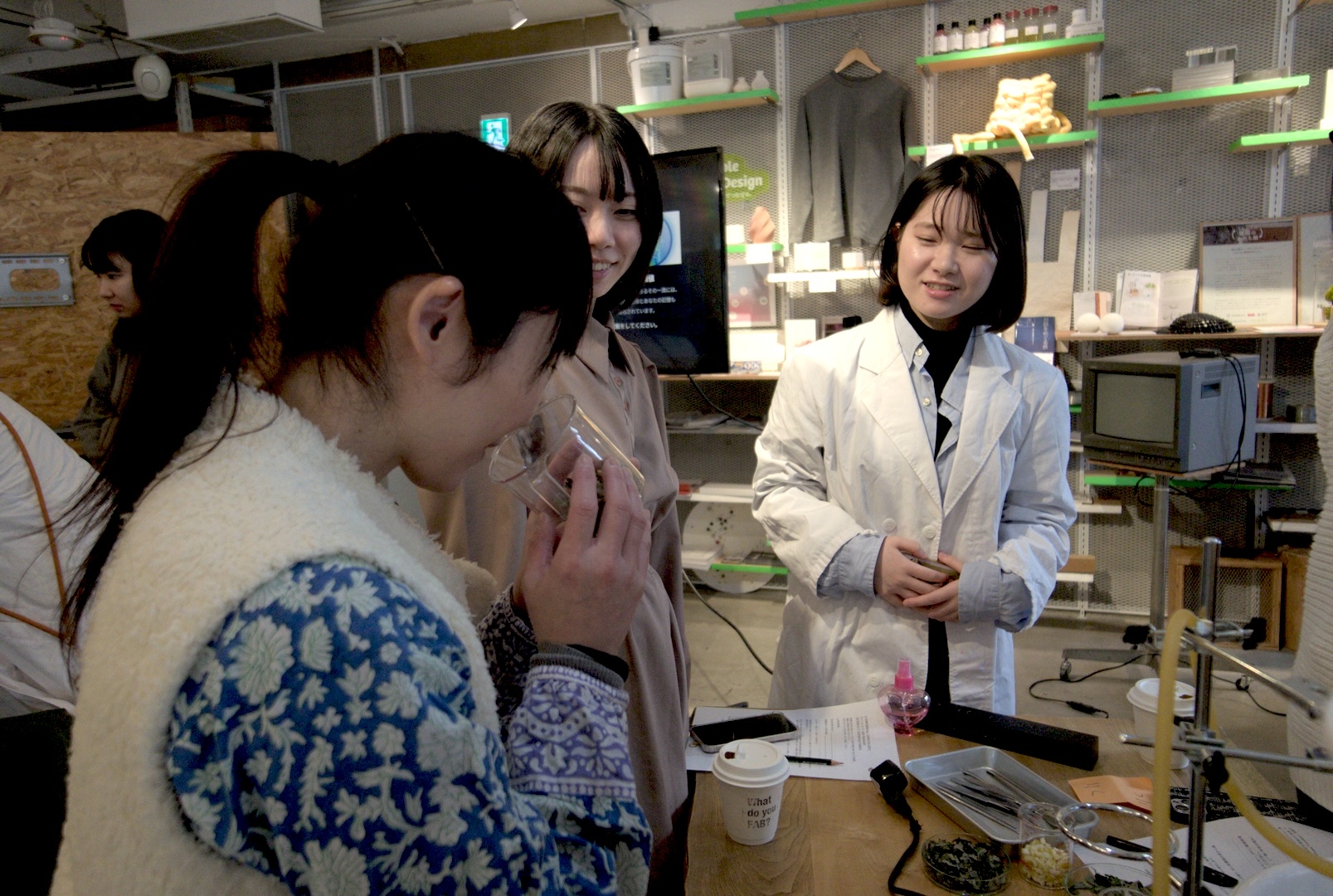
Learning about the chemical process behind scent extraction.
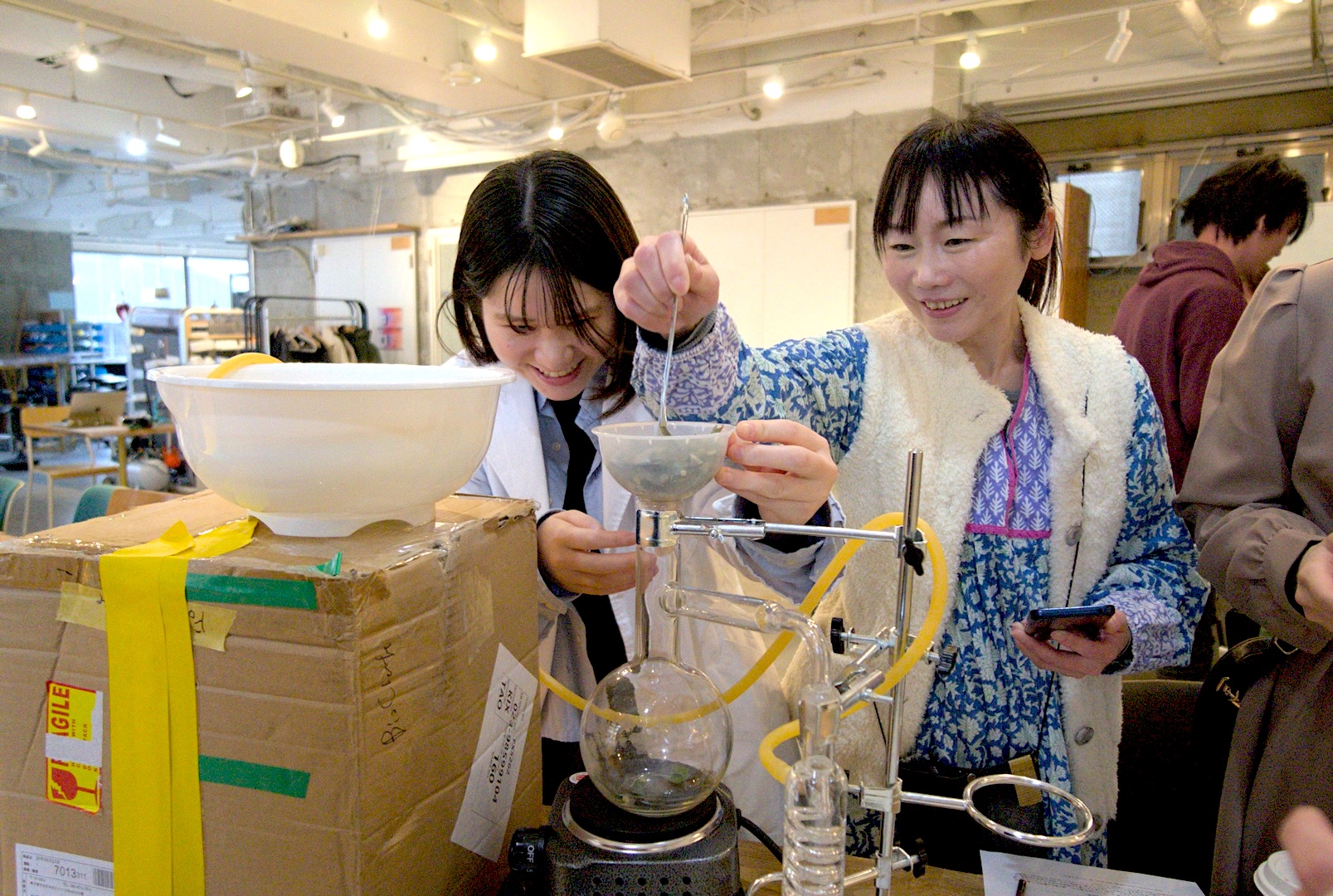
Adding the raw material into the flask before distillation.
-
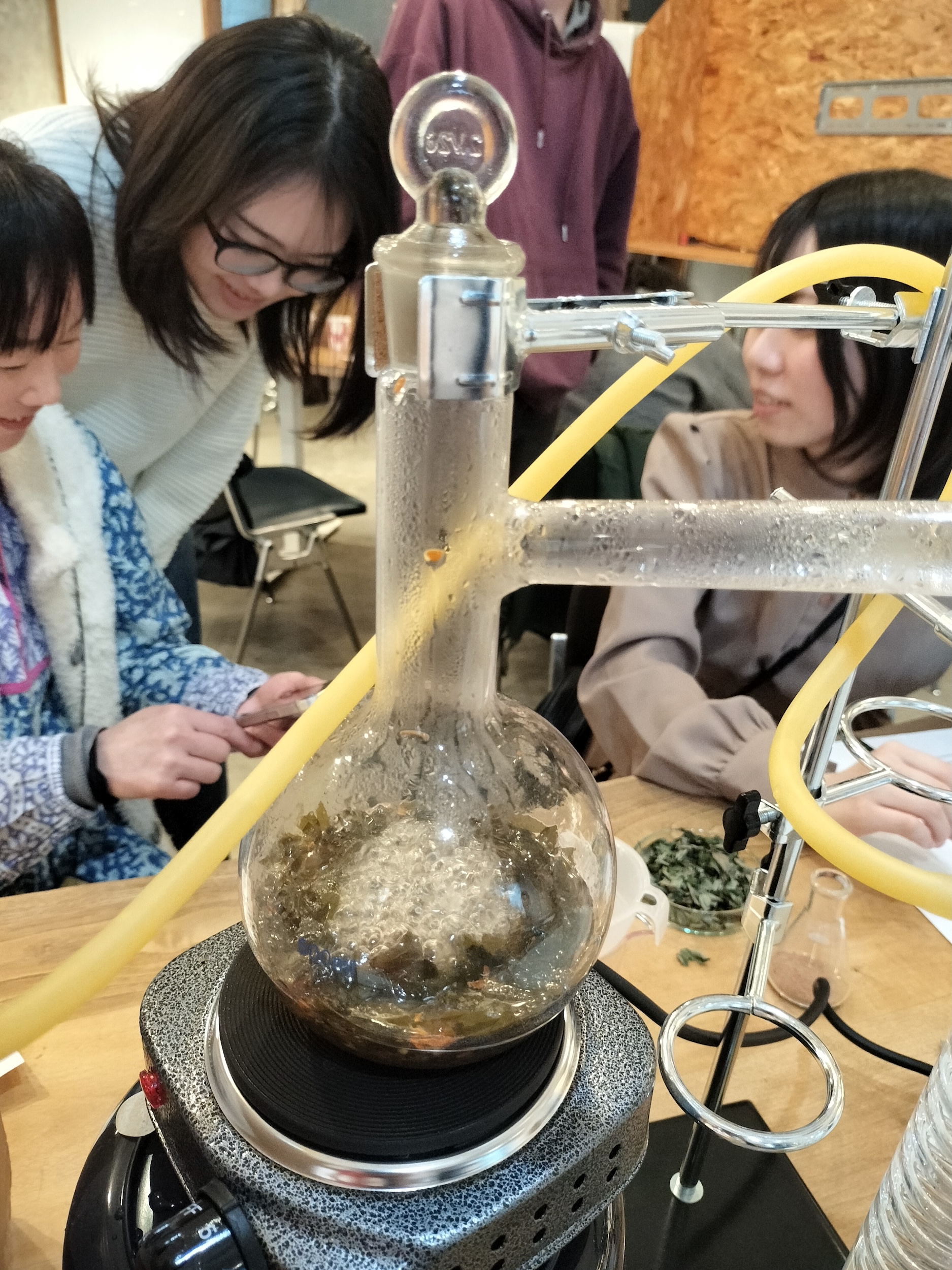
Participants watch the distillation apparatus as plant material breaks down and volatile compounds rise into the condenser. -
Participants worked in groups of four, selecting botanical materials and running them through professional distillation equipment. Heat broke down plant cells, releasing volatile compounds into steam. Condensers cooled the vapor back to liquid, collecting drops of essential oil. The process took about an hour per batch. Solid to gas to liquid, each phase visible through glass apparatus.
While participants participated in the transition from solid to liquid to gas, there was a noticeable quiet of focus that settled over the lab.
Playing on the idea of time travel, participants wrote stories about each blend based on moments and places from their experiences. Scent is a powerful trigger for memory. While information from our eyes and ears passes through the brain’s thalamus before reaching emotional and memory centers in the limbic system, olfaction bypasses this checkpoint entirely. Olfactory neurons extend directly to the brain’s olfactory bulb, which signals areas involved in memory and emotion.

The four completed distillations arranged on the table with their corresponding labels, botanical materials visible in petri dishes above.
-
Scent 1: "Shin-Kai-Shitsu" (Forest-Sea-Humidity)
Catchphrase: A memory of life when the forest and sea still existed side-by-side.
Story: In our managed future air, we find comfort easily. But is that enough? What does the “unpleasantness” of the past bring to you? This scent centers on moss, capturing a history of life that wasn’t always happy—the root of living in a physical body.
-
Scent 2: "Moonlight"
Catchphrase: The scent of moonbeams.
Story: A girl who grew up working hard had a dream one night. She became a butterfly, flew across the Earth all day, and finally learned the scent of osmanthus.
-
Scent 3: "Twilight - Light"
Catchphrase: A spoonful of light.
Story: Capturing the faint light of dusk itself—a color of time that does not exist in the future.
-
Scent 4: "Minato-machi" (Port Town)
Catchphrase: The sense of daily life lost to humans 200 years from now.
-
The event concluded with participants creating scent archives before returning to 2026. Their reflections centered on three insights: feeling seasons through scent requires being surrounded by nature, a single word can shift a scent’s entire impression, and awareness of scent changes how we see the world.
Groups of four had each distilled distinct botanical materials into original fragrances. The result was four unique archives. Even with similar bases, groups wove entirely different narratives into their scents. Each distillation received a name and story for the Scent Library, to be preserved until 2226.
This workshop was a partnership between BioCraft, part of 100 Banch, and BioClub Tokyo. The Scent Library is a work in progress, and we plan to continue these workshops, making olfactory chemistry and scent design accessible to anyone curious about the intersection of science, memory, and speculation. Follow BioCraft and BioClub Tokyo for future events.
-
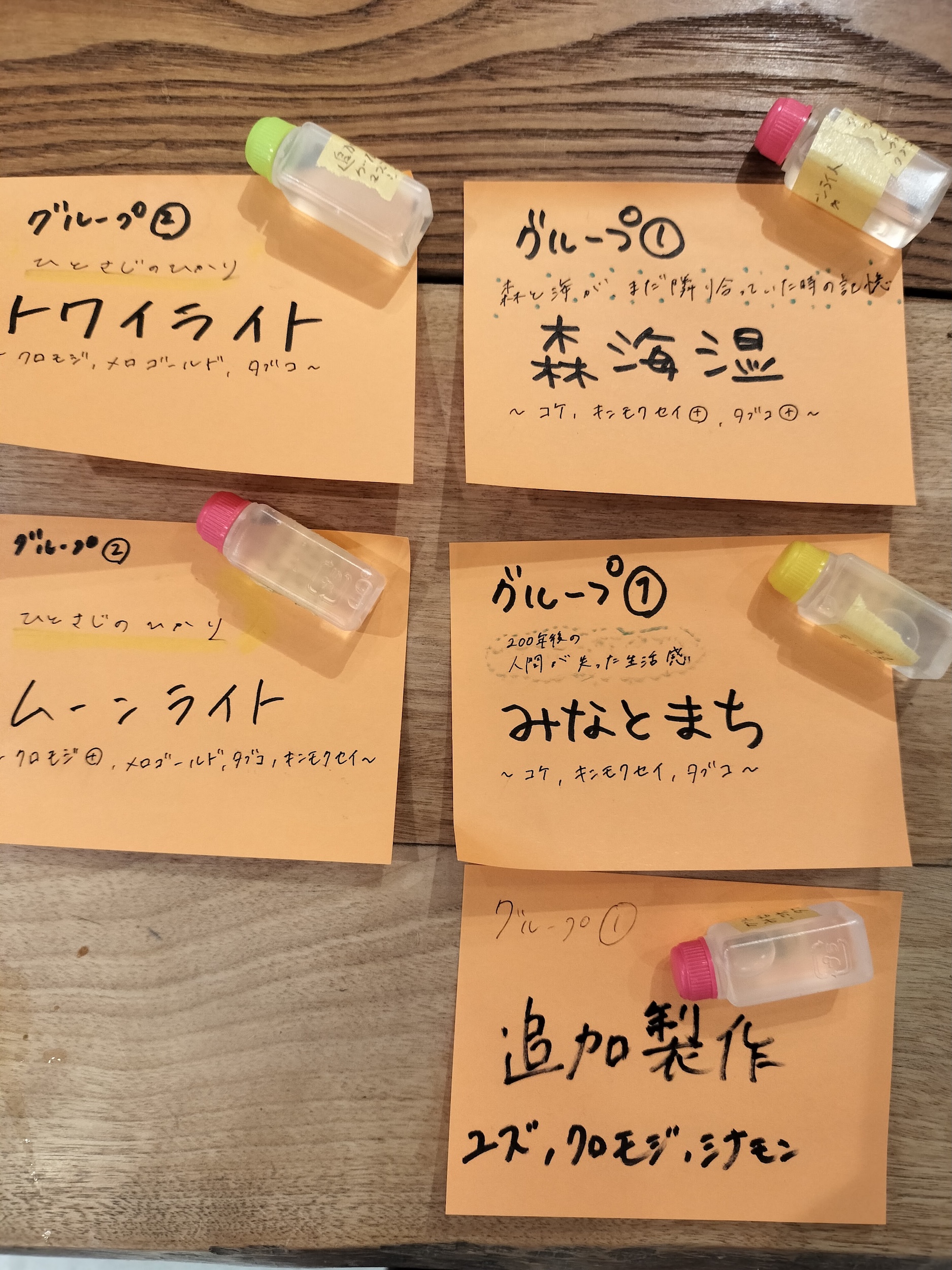
Four scent archives displayed with their names and ingredient lists, each vial paired with handwritten cards in Japanese.
-
BioCraft
Aiming to take science out of the hands of experts and make it something everyone can enjoy, BioCraft connects education, art, and science through activities based at 100BANCH and BioClub at FabCafe MTRL.
Aiming to take science out of the hands of experts and make it something everyone can enjoy, BioCraft connects education, art, and science through activities based at 100BANCH and BioClub at FabCafe MTRL.
-
BioClub
BioClub is a community biology lab supporting projects in bioart, biodesign, DIY bio, open science hardware, citizen science, and research. For over a decade, we have brought together people from diverse fields to collaborate, experiment, and create new perspectives using biology and nature as a source of creative ideas. Based around our open wet lab, we host weekly meetups, workshops, lectures, and collaborative projects. Artists, scientists, industry professionals, hobbyists, and complete beginners are all welcome. The goal is to experience biotechnology firsthand and discuss what it means from every angle.
BioClub is a community biology lab supporting projects in bioart, biodesign, DIY bio, open science hardware, citizen science, and research. For over a decade, we have brought together people from diverse fields to collaborate, experiment, and create new perspectives using biology and nature as a source of creative ideas. Based around our open wet lab, we host weekly meetups, workshops, lectures, and collaborative projects. Artists, scientists, industry professionals, hobbyists, and complete beginners are all welcome. The goal is to experience biotechnology firsthand and discuss what it means from every angle.


-
FabCafe Global Editorial Team
This articles is edited by FabCafe Global.
Please feel free to share your thoughts and opinions on this article with us.
→ Contact usThis articles is edited by FabCafe Global.
Please feel free to share your thoughts and opinions on this article with us.
→ Contact us -




See Branch List
See Keyword List
- #Craft
- #crQlr
- #HK Event Report
- #COUNTER_POINT
- #Prototyping
- #Design thinking workshop
- #SDG 14 Life under water
- #Miro
- #Creator Collaboration
- #Bangkok Design Week 2020
- #FabCafe Bangkok
- #Fab Meetup Hong Kong
- #FAB Ideation
- #Future City
- #COVID-19
- #Event Report
- #Sustainable
- #Business
- #Social Welfare
- #Fab Meetup
- #Exhibition
- #Art
- #SDGs
- #Haptic Design
- #Material
- #Drawing
- #Wood
- #Hackathon
- #AI
- #Agriculture
- #YouFab
- #Workshop
- #Meetup
- #AWRD
- #Bio
- #Global Goals Jam
- #XR (VR/AR/MR)
- #Talk Event
- #Ideathon
- #Embroidery
- #Material Meetup
- #Innovation
- #Architecture
- #Interview
- #Education
- #3D
- #Business Projects
- #Community